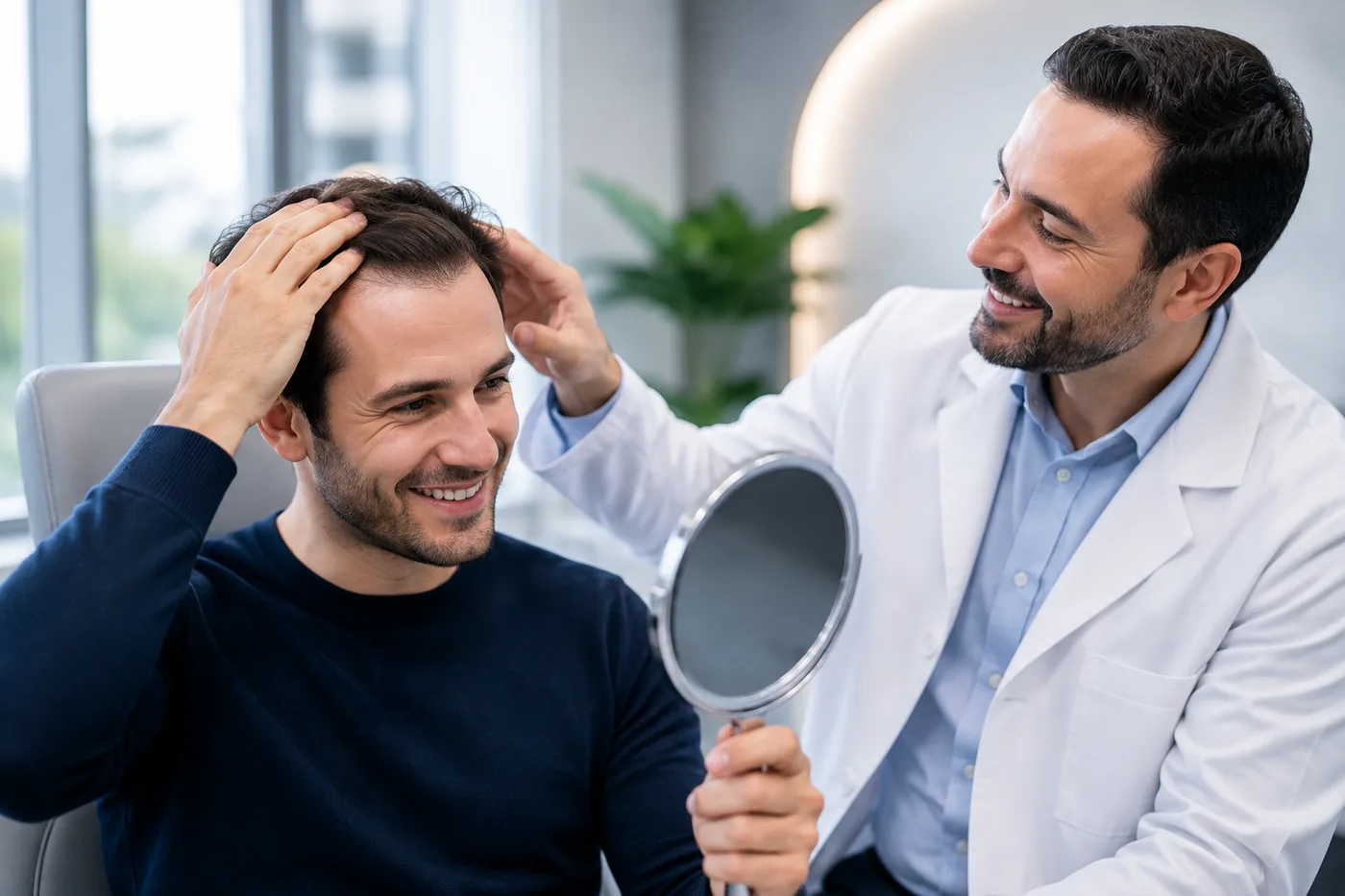
What is a hair transplant, and how does it work?
A hair transplant is a minor surgical procedure that relocates healthy hair follicles from a donor area - usually the back and sides of the head - to thinning or bald areas. Because donor follicles are genetically resistant to balding, they continue to grow in their new location, giving a permanent, natural-looking result.
What is FUE (follicular unit extraction)?
FUE is the most common modern technique. The surgeon extracts follicular units one by one with a tiny punch, then implants them into the recipient area. It leaves no linear scar and has a faster recovery than older strip methods - which is why it dominates the market. Learn more in how the procedure works.
What hair-restoration methods are there?
There are two main surgical methods (FUE and FUT), a variation called DHI, and non-surgical treatments (PRP, stem-cell therapy, medication). Here's how the surgical options compare at a glance - see the full FUE vs FUT comparison.
| Method | Scarring | Recovery | Best for |
|---|---|---|---|
| FUE | Tiny dot scars | Faster | Most patients, shorter styles |
| FUT | One linear scar | Slower | Large sessions, lower per-graft cost |
| DHI | Minimal | Similar to FUE | Precise, dense packing |
Am I a good candidate for a hair transplant?
The best candidates have stable hair loss, a healthy donor area with good density, and realistic expectations. Age, the cause of your loss, and how much donor hair you have all matter. A consultation confirms candidacy - start with the signs and candidacy checklist.
Are the results permanent, and when will I see them?
Yes - transplanted follicles typically grow for life. After surgery the new hairs shed within a few weeks (this is normal), then regrow from around month three. You'll see meaningful density by 6–9 months and final results near 12 months.
Is a hair transplant safe? What are the risks?
Performed by a qualified surgeon, a hair transplant is a low-risk outpatient procedure. Uncommon risks include infection, poor growth, or an unnatural result from bad technique. Choosing an experienced, accredited clinic is the single biggest safeguard - see how to choose a clinic and what can go wrong.
Do non-surgical options (PRP, stem cell) work?
PRP (platelet-rich plasma) and stem-cell therapies can support existing hair and are sometimes used alongside surgery, but they don't regrow a fully bald area on their own. Medications like minoxidil and finasteride slow loss but must be continued. See DIY vs professional for what actually works.
Popular guides
Frequently asked questions
Transplanted follicles are taken from areas resistant to balding, so they typically keep growing for life. Existing untreated hair can still thin, which is why long-term planning matters.
With a skilled surgeon designing the hairline and angling grafts correctly, modern transplants are very hard to detect. A clinic's real, unretouched case photos are the best indicator.
Yes, for suitable candidates with a stable donor area. Female hair loss is often diffuse, so careful assessment is essential to confirm a transplant is the right option.
Performed by a qualified surgeon it's considered low-risk. Complications are uncommon but possible; choosing an experienced, accredited clinic is the main safeguard.
Sources & notes
General guidance compiled from recognised bodies and clinical literature. Individual suitability, results, and risks vary - confirm details at a professional consultation.
- International Society of Hair Restoration Surgery (ISHRS) - patient resources.
- American Academy of Dermatology (AAD) - hair loss and restoration overviews.
- American Society of Plastic Surgeons (ASPS) - hair transplant procedure information.