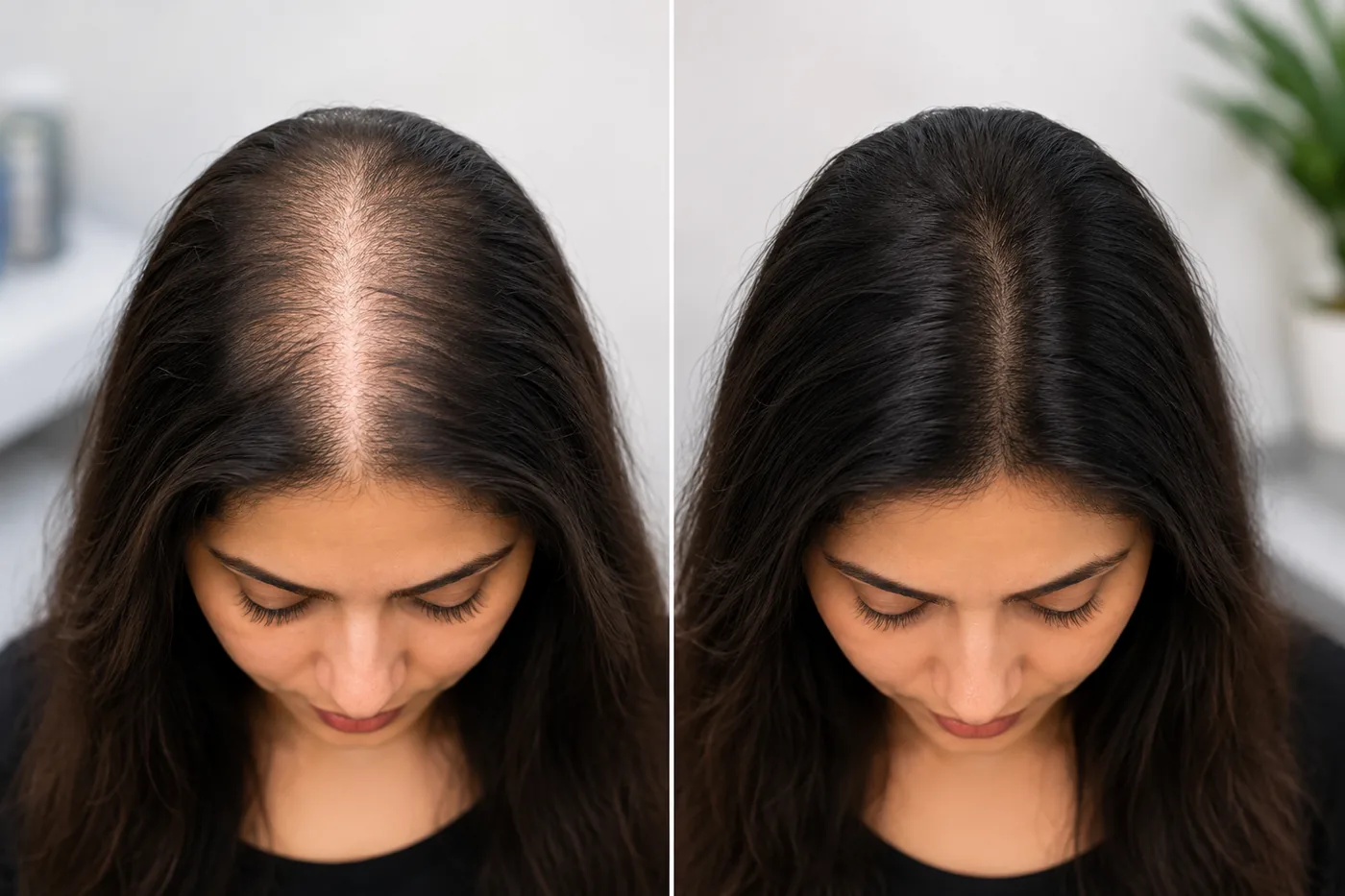
What does a frontal hair transplant cost for a woman?
Frontal procedures are priced by graft count like any other transplant, at roughly $3–$8 per graft in the US. What varies is how many grafts your goal requires. These are typical scenarios; your own estimate depends on your hairline, donor density and the look you want.
| Frontal goal | Typical grafts | Typical US cost |
|---|---|---|
| Refining temples or softening a hairline edge | 300–800 | $3,000–$6,000 (clinic minimums often apply) |
| Rebuilding temples after traction alopecia | 800–1,500 | $4,000–$8,000 |
| Filling frontal thinning behind the hairline | 1,000–2,000 | $5,000–$10,000 |
| Lowering a high hairline with grafts | 1,500–2,500+ | $8,000–$12,000+ |
Prices in large metros like New York, Los Angeles and Miami often sit toward the upper end of these ranges.
Why is frontal work priced differently from other areas?
The front of the head is the most visible part of any transplant, and it's where a poor result is hardest to hide. That affects cost in a few ways. The hairline is built mostly from single-hair grafts set at very fine angles, which is slow, detailed work. Women's hairlines are also typically rounder and lower at the temples than men's, with softer, irregular edges, so the design needs a surgeon with female-specific experience.
Many women want the procedure without shaving, which adds time and usually a premium. And to reach natural-looking density at the front, some patients need a second session, which should be factored into the budget from the start.
Grafts or surgical hairline lowering - which costs less?
If your hairline has always been high and the hair behind it is thick, surgical hairline lowering (sometimes called forehead reduction) may be an option. The surgeon removes a strip of forehead skin, advances the scalp forward and closes the incision along the hairline. It gives an immediate result in one operation, but it relies on having a loose enough scalp and leaves a fine scar at the front.
| Factor | Hairline transplant | Surgical hairline lowering |
|---|---|---|
| Typical US cost | $8,000–$12,000+ for a full lowering | Often roughly $8,000–$15,000, varying widely by surgeon and anaesthesia |
| When you see the result | Gradually, final around 12 months | Immediately, once swelling settles |
| Scar | Donor area only | Fine scar at the hairline, usually concealed by hair growing through it |
| Best for | Recession, thinning temples, tight scalps | Naturally high forehead with dense hair behind it |
| Uses donor grafts | Yes | No, preserving them for future needs |
Some women combine the two: lowering first, then a small graft session to soften the scar line or shape the temples.
Which frontal hair loss can a transplant fix?
A transplant works best when the frontal loss is stable and the donor area is healthy. Good fits include:
- Traction alopecia from tight ponytails, braids or extensions, once the tension has stopped
- A naturally high or uneven hairline
- Temple loss or scarring after a facelift or brow lift
- Localised frontal thinning in female pattern hair loss with a stable donor area
Some conditions call for caution. Frontal fibrosing alopecia, a scarring condition that causes the hairline to recede, often in postmenopausal women, needs a dermatologist's diagnosis and treatment first; grafts can fail if the condition is still active. Active alopecia areata is also generally not treated with a transplant.
How many grafts will your hairline need?
Graft needs depend on how far forward the hairline is moved, how wide the temples are and how dense you want the front to look. As a rough guide, lowering a hairline by around a centimetre across the full width can take over a thousand grafts, and larger moves need more. A surgeon will measure the area and assess your donor supply before committing to a number. Our graft calculator guide explains the maths.
Be wary of pushing for maximum density in one sitting. Grafts packed too tightly can grow less reliably, and a very dense, sharp edge rarely looks natural on a woman. Many surgeons prefer a well-designed first session with moderate density, then a smaller refinement later if needed. That approach can cost more in total, but it protects both the result and your donor supply.
What does recovery cost you in time?
Frontal grafts sit in the most visible spot, so plan for some downtime. Tiny scabs usually form along the hairline for 7–10 days, and swelling can drift to the forehead and around the eyes for a few days. Many women with longer hair can style fringes or side parts over the area, but avoid tight hats or headbands pressing on fresh grafts in the first days unless your clinic approves them.
Most women take about a week off work. Surgical hairline lowering often needs a similar week for swelling and sutures, with stitches typically removed around one to two weeks. Factor any unpaid leave into your budget, and read the hair transplant scars guide if the incision line concerns you.
What extra costs apply to frontal procedures?
- No-shave premium for extraction and placement under long hair
- Diagnostic workup to rule out scarring alopecia, especially if the hairline has moved recently
- A second session for extra density, which some frontal cases need
- Ongoing treatment such as minoxidil if the surrounding hair is thinning
- Optional PRP, typically $500–$1,500 per session, with mixed evidence
Is it worth paying more for an experienced surgeon here?
For frontal work, usually yes. A hairline that's too straight, too dense at the edge, or angled wrongly is noticeable and difficult to correct later, and repair work often costs more than the original surgery. Ask to see before-and-after photos of female hairlines specifically, taken with the hair pulled back. Board-certified surgeons and ISHRS members who regularly treat women are a good starting point. See our guide to choosing a provider.
How do you get an accurate frontal quote?
Send each clinic clear photos with your hair pulled fully back from the front, from both sides and from above, plus a photo of the donor area. Note how long the hairline has been changing and any styling habits or medical diagnoses. Ask whether they'd recommend grafts, hairline lowering, or both, and for an itemised price. Then request free quotes to compare vetted US surgeons.
Related guides
Frequently asked
Yes. A transplant can create a new, lower hairline using grafts from the back of the scalp. It suits women with good donor density and is an option when the scalp is too tight for surgical hairline lowering.
Traction alopecia repairs at the temples typically need 800–1,500 grafts, costing about $4,000–$8,000 in the US. The tension that caused the loss must stop first, or new grafts may be lost the same way.
Usually not, as it's considered cosmetic. Coverage is only likely when the surgery is reconstructive, for example after trauma. Get any coverage decision in writing before booking.
Transplanted hair usually sheds in weeks 2–4, starts regrowing around month 3, shows visible change by month 6 and reaches its final look around 12 months. See the recovery timeline.
It can, when the surgeon designs a soft, slightly irregular hairline with single-hair grafts at the edge and proper angles. Ask for female hairline results specifically before choosing a clinic.
Only with great caution. A dermatologist should first confirm the condition has been inactive for a sustained period. Even then, graft survival can be unpredictable, and many surgeons advise against surgery.
About this guide
This is an independent overview to help you decide. Figures are typical US ranges, not a quote, and general information is not medical advice - confirm details at a consultation. See our methodology and disclosure.