What happens on the day of an FUE procedure?
Every clinic runs its day slightly differently, but most FUE procedures follow the same broad schedule. This example assumes a medium session of around 2,000 grafts starting in the morning:
| Approx. time | Step | What you experience |
|---|---|---|
| 7:30–8:30 am | Arrival and pre-op checks | Paperwork, consent, vital signs, photos, any oral medication |
| 8:30–9:00 am | Hairline design | Surgeon draws the plan on your scalp; you review it in a mirror |
| 9:00–9:30 am | Trimming and numbing the donor area | Hair clipped short; local anaesthetic injections sting briefly |
| 9:30 am–12:30 pm | Graft extraction | Lying face down or on your side; pressure and sounds, not pain |
| 12:30–1:00 pm | Lunch break | Eat, use the bathroom, stretch |
| 1:00–2:30 pm | Numbing and recipient site creation | Seated or reclined; injections, then tiny incisions you don't feel |
| 2:30–5:00 pm | Graft placement | Team places grafts; many patients watch TV or doze |
| 5:00–5:30 pm | Final check and discharge | Cleaning, donor dressing, aftercare talk, medication, go home |
Smaller sessions can finish by early afternoon, while larger ones may run into the evening or be split over two days.
How should you prepare for the procedure?
Your clinic will give you specific instructions, usually one to two weeks before surgery. Common ones include:
- Stop smoking, ideally at least a week or two beforehand
- Avoid alcohol for a few days before surgery
- Ask your doctor before stopping any prescription medication, including blood thinners
- Pause supplements that can increase bleeding, such as fish oil, vitamin E or ginkgo, if advised
- Don't cut your hair very short beforehand unless told to - the team needs to see natural growth direction
- Eat a normal breakfast, and wear a button-up or zip-up top
- Arrange a ride home, particularly if you're given sedation
- Bring headphones, a charger, and something to watch or listen to
How is the hairline designed?
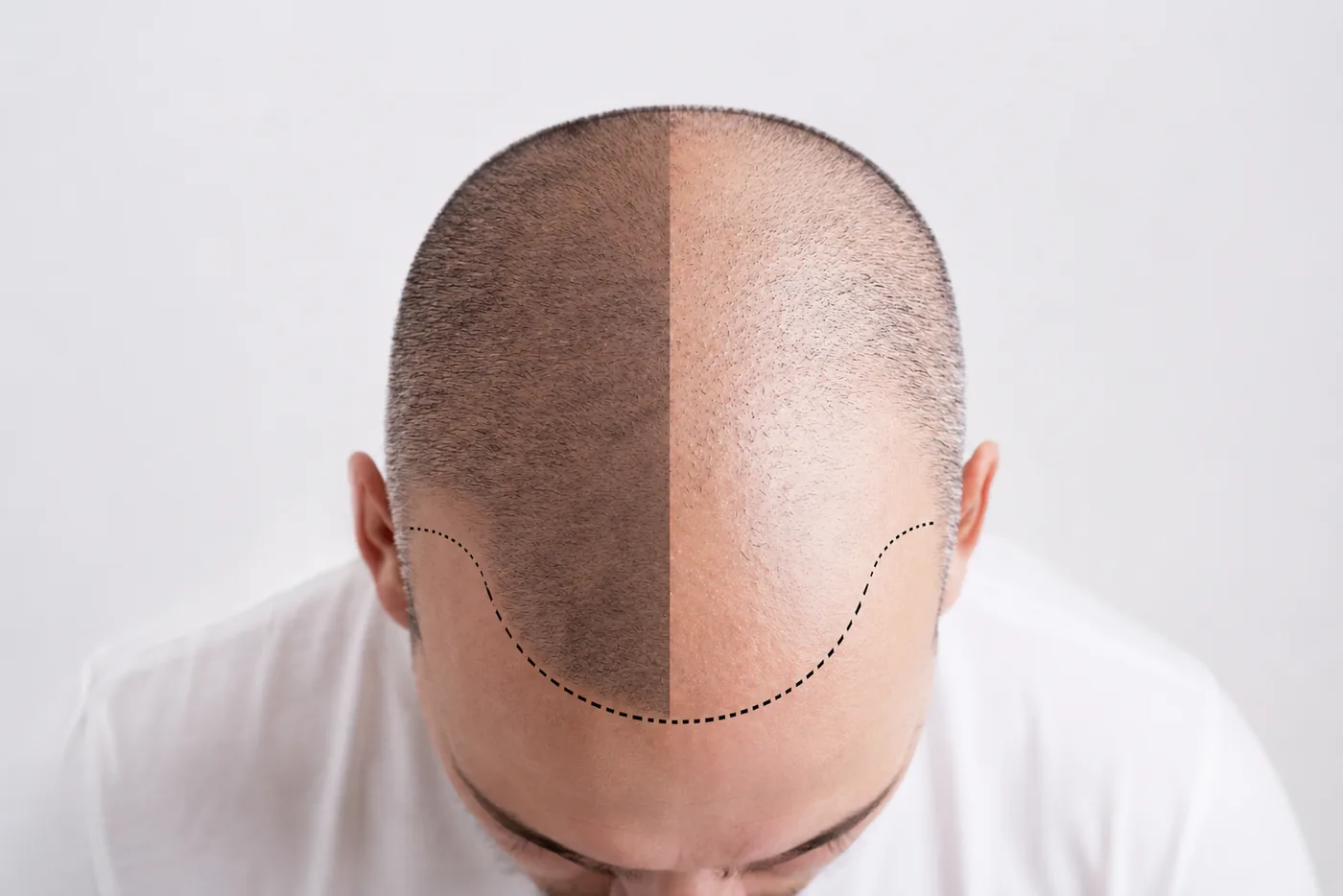
This is one of the most important moments of the day. The surgeon marks the new hairline, the areas to be filled and sometimes the planned density zones with a surgical marker. A good design takes into account your age, face shape, the pattern of your loss and how much donor hair is available for future work.
Take your time here. Look in the mirror, ask questions, and speak up if you're not comfortable. It's much easier to adjust a line on the skin than grafts in the scalp. See the best age for a transplant for why hairline position changes with age.
How are the grafts extracted?
Once the donor area is numb, the surgeon uses a small punch, typically about 0.7–1.0 mm in diameter, to score around each follicular unit. The unit is then gently teased out with fine forceps. Extraction may be manual, motorised or robotic-assisted. Grafts are spread evenly across the safe donor zone so the back and sides don't look thinned.
As grafts come out, technicians examine them under magnification, sort them into one-, two- and three-hair groups, and store them in chilled holding solution. For a deeper look at punches and devices, see the FUE method.
How are recipient sites made and grafts placed?
After lunch, the recipient area is numbed. The surgeon creates tiny incisions with a fine blade, needle or sapphire tool. Each site sets the angle, direction and depth of the future hair, so this step largely decides how natural the result looks. Single-hair grafts go at the very front in a slightly irregular pattern, with denser multi-hair grafts behind.
The team then inserts grafts into the sites one at a time with fine forceps, or with an implanter pen in DHI-style procedures. Placement is slow and methodical, and it's often the longest stage of the day. Grafts are handled by the surrounding tissue to avoid damaging the bulb.
Does the FUE procedure hurt?
The local anaesthetic injections sting for a few minutes. After that, most patients feel pressure, tugging or vibration rather than pain, and top-up injections are given before numbness wears off. Many clinics offer mild oral sedation, vibration devices to distract from injections, or longer-acting anaesthetic at the end of the day. The most uncomfortable part for many people is simply lying still for hours. Read more in our hair transplant pain guide.
What happens at the end of the day?
The team cleans the scalp, checks every area and usually applies a light dressing or bandage to the donor site. Recipient grafts are typically left uncovered. Before you leave, you should receive:
- Written aftercare instructions and an emergency contact number
- Prescriptions or medication for pain, swelling and sometimes infection prevention
- A saline spray or aftercare kit if the clinic uses one
- A loose hat or head covering for the trip home, if appropriate
- A time for your next-day check or first wash
Plan to rest that evening and sleep with your head raised. Details for the following days are in FUE aftercare.
What are the risks of the procedure?
FUE is generally considered low-risk when done by a qualified team. Possible issues include bleeding, swelling of the forehead, temporary numbness, infection, folliculitis (small pimples), shock loss of nearby native hair, visible donor scarring if over-harvested, and poor graft growth. Serious complications are uncommon. Tell your surgeon about all medications and health conditions at consultation so risks can be managed. See our problems hub for how these are handled.
Serious problems are rare, but knowing the warning signs - spreading redness, pus, fever or worsening pain - means you can act quickly.
How do you book an FUE procedure?
Before booking, make sure you know who will perform each step, how many grafts are planned and what the total cost includes - US FUE typically runs $5–$8 per graft. Request a free quote to compare procedures from vetted US FUE surgeons.
Related guides
Frequently asked
Yes. Most clinics schedule a lunch break between extraction and placement, and snacks and drinks are usually available. Eat a normal breakfast before you arrive unless told otherwise.
Often, yes, especially during graft placement when you're seated. During extraction you may be lying face down, so many clinics provide TV screens or you can listen to audio.
It's strongly recommended, and required if you've had sedation. You'll also feel tired after a long day and may have a dressing on your head.
No. Routine FUE uses local anaesthetic, sometimes with mild oral sedation. You stay awake throughout, which avoids the added risks of general anaesthesia.
Many clinics place about 1,500–3,000 grafts in one day. Larger cases may be spread over two consecutive days depending on donor supply and team capacity.
Yes. The team can pause at almost any point, and good clinics build regular breaks into the schedule so you can use the bathroom and stretch.
About this guide
This is an independent overview to help you decide. Figures are typical US ranges, not a quote, and general information is not medical advice - confirm details at a consultation. See our methodology and disclosure.