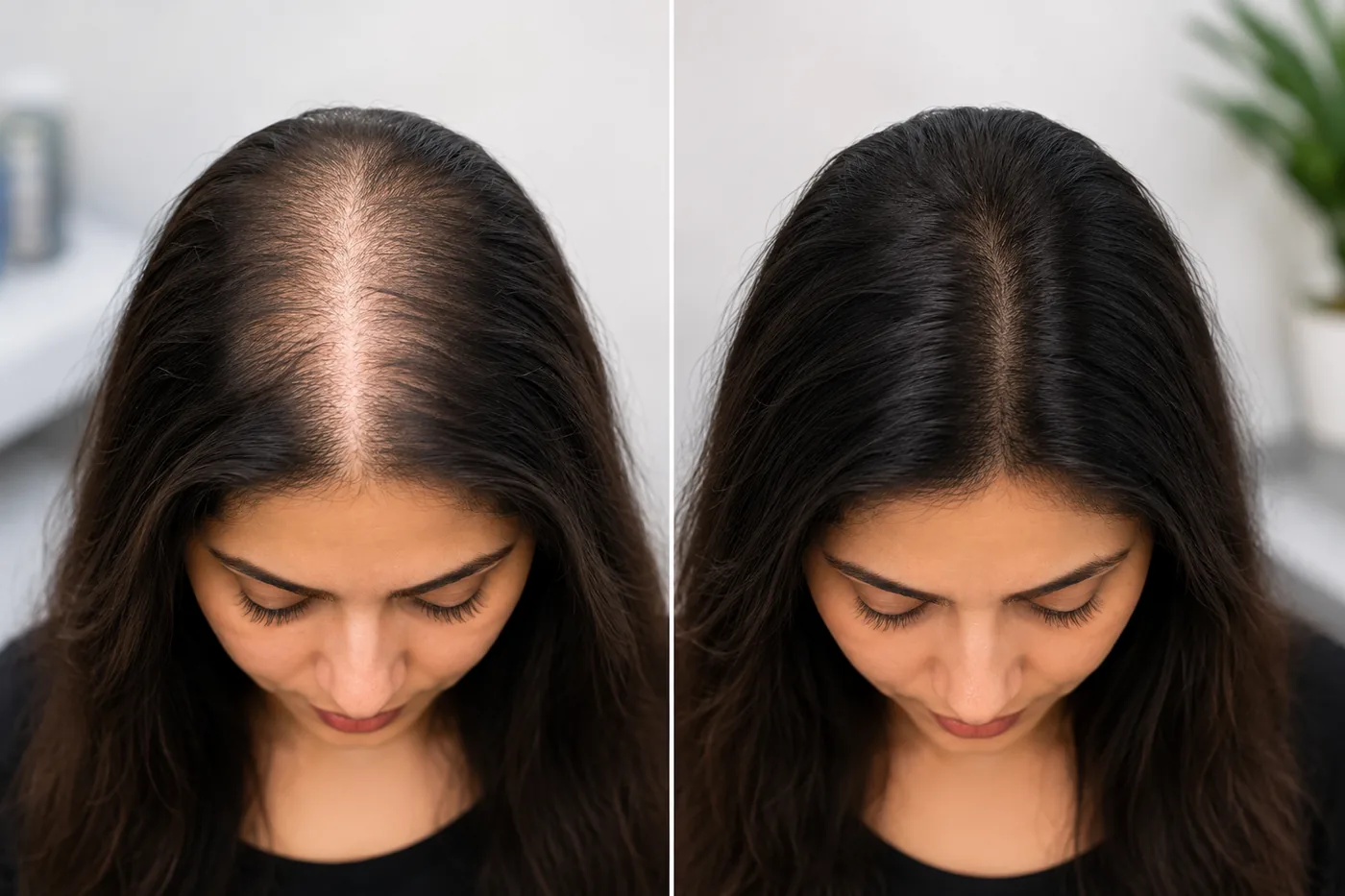
What does the full cost of a female hair transplant include?
For men, a transplant quote often tells most of the financial story. For women, it's closer to half of it. Female hair loss usually thins the hair around the transplanted area too, so surgeons generally pair surgery with medical treatment, and many insist on a proper diagnosis first.
A realistic budget has four parts:
- Diagnosis - confirming the cause and that you're a suitable candidate.
- The transplant - the surgeon's fee, grafts, facility and aftercare.
- Maintenance treatment - usually minoxidil, sometimes prescription medication or PRP.
- Contingencies - travel, time off, and a possible second session later.
How much does diagnosis cost before surgery?
Expect to see a dermatologist or hair-loss specialist before a surgeon agrees to operate. A consultation, blood tests (commonly iron stores, thyroid function and, where relevant, hormone levels) and a close scalp examination often total a few hundred dollars. A scalp biopsy, used when the diagnosis isn't clear or a scarring condition is suspected, adds to that.
Because these steps investigate a medical condition, health insurance is more likely to cover them than the transplant itself - check your plan. Many transplant clinics offer free or low-cost surgical consultations, but those don't replace a medical workup if the cause of your thinning hasn't been established. A hair restoration dermatologist can handle both.
What does the transplant itself cost?
Clinics price by graft count and technique. US fees typically run $3–$8 per graft: FUT at around $3–$6 and FUE at around $5–$8, with unshaven FUE often priced higher again. Women's cases usually fall in the small-to-medium range.
What pushes the procedure fee up for women is mostly time: working between long, existing hairs is slower, and no-shave extraction takes more skill. What keeps it down is that fewer grafts are usually needed than in a man with advanced baldness. Check how your quote compares using our cost per graft guide.
Why is ongoing treatment part of the budget?
Transplanted follicles come from a donor area that's relatively resistant to thinning, so they tend to last. The hair around them doesn't have that protection. Without treatment, a woman can end up with a well-filled transplanted zone surrounded by continued thinning.
- Topical minoxidil - FDA-approved for women, sold over the counter, and usually a modest monthly cost. Benefits last only while you use it.
- Prescription options - some doctors prescribe off-label medication such as spironolactone or low-dose oral minoxidil. Generic versions are often inexpensive, but they require monitoring and aren't suitable for everyone, especially during pregnancy.
- PRP - typically 3–4 monthly sessions, then maintenance every 4–6+ months, at roughly $500–$1,500 per session. Evidence is promising but mixed.
- Follow-up visits - often included for the first year after surgery; later visits may be charged.
What might a first-year and five-year budget look like?
These illustrative scenarios use typical US ranges. Your own figures will vary with location, surgeon and treatment choices.
| Scenario | Year one (approx.) | Years two to five (approx.) | What's included |
|---|---|---|---|
| Small FUT or FUE, minoxidil only | $4,500–$9,000 | A few hundred dollars per year | Workup, 800–1,500 grafts, daily topical treatment |
| Medium FUE with no-shave, minoxidil | $9,000–$13,500 | A few hundred dollars per year | Workup, 1,500–2,500 grafts, daily topical treatment |
| Medium procedure plus PRP course | $11,000–$18,000 | $1,000–$4,500+ per year | As above, plus 3–4 PRP sessions and maintenance |
| Medical treatment only | A few hundred to $1,000+ | A few hundred dollars per year | Workup, minoxidil and any prescription medication |
The last row matters: for many women with diffuse thinning, medical treatment alone is the right plan, and it costs a fraction of surgery.
Will you need a second procedure?
Not necessarily, but it's sensible to plan for the possibility. Female pattern hair loss is progressive, and some women want more density after seeing their 12-month result. A second session is usually smaller than the first and is typically priced the same way - per graft, often with the clinic's minimum fee. Ask at consultation whether the surgeon expects a follow-up session in your case and whether your donor area could support one.
How do women usually pay for a hair transplant?
Insurance almost never covers transplant surgery, and cosmetic procedures generally aren't eligible for HSA or FSA funds. Most patients pay a deposit to book, then the balance on or before surgery day, or finance it through a clinic plan or medical lender over 24–48 months. Compare the total repayable amount, not just the monthly figure. Our cost hub covers payment options in more detail.
Which costs are easy to overlook?
A few expenses rarely make it into early budgets but can add up:
- Time off work. Most women take 3–7 days off, longer for a visible shaved procedure. Unpaid leave is a real cost.
- Travel and accommodation if your chosen surgeon is in another city, including a possible return trip for the next-day check.
- Hair camouflage such as fibres, scarves or a topper during the shedding phase in weeks 2–4.
- Styling changes. Colouring, chemical treatments and extensions are usually paused for several weeks, which some women cover with salon visits later.
- Repair work if a first procedure elsewhere was poorly planned - often more expensive than getting it right the first time.
None of these should decide the question on their own, but listing them makes it easier to compare a local surgeon with a cheaper option further away.
How do you get a personalised estimate?
Ask each clinic for an itemised quote that separates the procedure fee from medications, PRP and follow-ups, and ask what maintenance they'd recommend afterward. That lets you compare the full cost of care rather than a headline number. If you're unsure whether surgery is even right for you, start with our guide to female hair transplants, then request free quotes from vetted US providers.
Related guides
Frequently asked
For as long as you want to protect your native hair. Minoxidil doesn't affect the transplanted follicles much, but it helps the surrounding hair, and its benefits fade within months of stopping.
Generally not, since the IRS treats cosmetic surgery as non-deductible unless it corrects a deformity from injury, disease or a congenital condition. Ask a tax professional about your situation.
Many offer free consultations, and some charge a fee that's credited toward surgery. A medical workup with bloodwork or a biopsy is a separate cost, sometimes covered by insurance.
The surgery is often a one-time cost, but most women budget for ongoing medical treatment afterward and some choose a smaller second session later. Plan for both when deciding.
Usually, because fewer grafts are needed. However, many clinics have a minimum fee, so a small repair may still cost several thousand dollars. Always ask for the per-graft rate and the minimum.
No. PRP is optional and evidence for it is promising but mixed. Some surgeons offer it on surgery day or afterward. Read our PRP hair restoration guide before paying for a course.
About this guide
This is an independent overview to help you decide. Figures are typical US ranges, not a quote, and general information is not medical advice - confirm details at a consultation. See our methodology and disclosure.