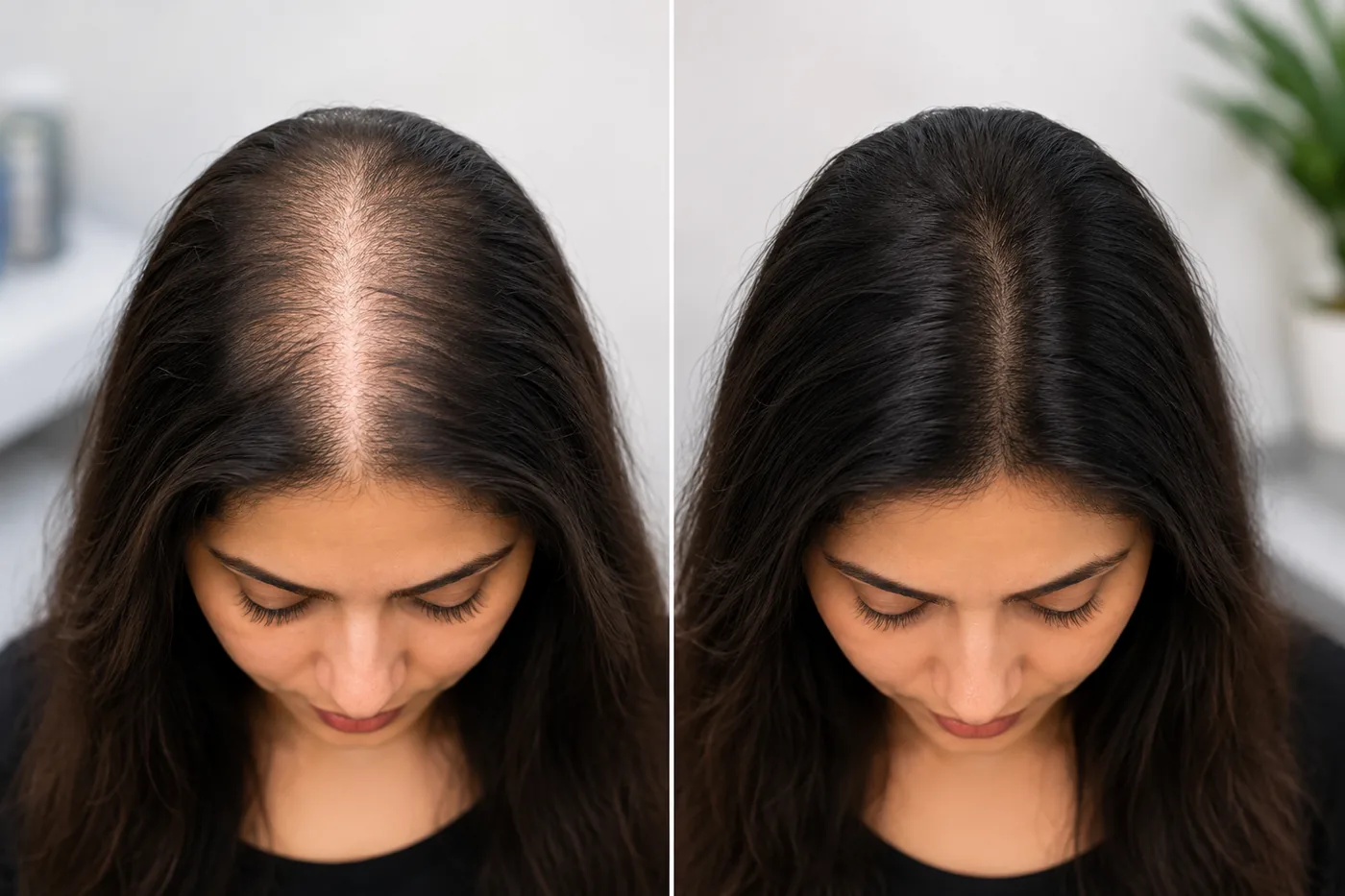
What does female hair restoration include?
Hair restoration is a broad term. For women it usually falls into four groups, and many women use more than one at the same time:
- Medical treatment - topical or oral medication to slow thinning and encourage regrowth
- In-clinic procedures - such as PRP injections or microneedling
- Devices - low-level laser caps, combs and helmets for home use
- Surgery - hair transplantation or, in some cases, hairline lowering
- Cosmetic solutions - toppers, wigs, extensions, fibres and scalp micropigmentation
None of these work equally well for every woman. Restoration only makes sense once you know why your hair is thinning, because treating low iron or a thyroid problem can matter more than any product.
Which medical treatments work for female hair loss?
Topical minoxidil is the best-established option. It's FDA-approved for female pattern hair loss, available over the counter as a 2% solution and 5% foam, and it can slow thinning and thicken existing hair. It takes several months to show an effect, may cause a temporary shed at the start, and the benefit fades if you stop.
Doctors also prescribe some medications off-label for women:
- Spironolactone, which blocks androgen effects and is often used when hormones play a role, such as in PCOS
- Low-dose oral minoxidil, increasingly used by dermatologists for patients who find topical versions inconvenient or irritating
- Finasteride or dutasteride, occasionally used in postmenopausal women; they're generally avoided in women who could become pregnant because of the risk to a male fetus
All prescription options have possible side effects and need a doctor's supervision. Correcting deficiencies, such as low iron stores, is also part of medical treatment when tests show a problem.
Do PRP and laser devices help women?
PRP (platelet-rich plasma) uses a concentrate from your own blood, injected into the scalp. A typical course is 3–4 monthly sessions, then maintenance every 4–6+ months, at roughly $500–$1,500 per session in the US. Studies are promising but mixed, and protocols vary between clinics. Read more in our PRP hair restoration guide.
Low-level laser therapy devices are FDA-cleared for some types of hair loss and are used at home several times a week. Results tend to be modest and depend on consistent use. You may also see stem cell or exosome treatments advertised; these are experimental and not FDA-approved for hair loss, so treat claims with caution and ask any clinic offering them what evidence supports the price. See does stem cell hair restoration work.
How do the main options compare?
| Option | Best for | Typical US cost | Time to judge results |
|---|---|---|---|
| Topical minoxidil | Female pattern thinning, early to moderate | Low monthly cost, ongoing | 6–12 months |
| Prescription medication | Hormone-related thinning or minoxidil non-responders | Often inexpensive generics plus doctor visits | 6–12 months |
| PRP | Adding to medical treatment; early thinning | $500–$1,500 per session | After the initial 3–4 session course, then several months |
| Laser cap or comb | Mild thinning; people wanting a drug-free add-on | One-off device cost, varies widely | 6 months or more |
| Hair transplant | Localised, stable loss with a strong donor area | $4,000–$12,000 for most female cases | Around 12 months |
| Topper or wig | Immediate coverage; any cause | Varies widely by hair type and quality | Immediate |
When is surgery the right choice?
A transplant can be excellent for women with traction alopecia, a naturally high hairline, scars, or thinning that's concentrated in one area with a healthy donor zone behind it. It's usually not the answer for diffuse thinning across the whole scalp, active shedding, or conditions like active alopecia areata.
Most surgeons want medical treatment to be tried and the hair loss to be stable first. That improves the result and protects the native hair around the grafts. If you're weighing surgery, our female hair transplant guide covers candidacy in detail.
What about toppers, extensions and camouflage?
Non-medical options deserve more credit than they get. A well-fitted hair topper clips into existing hair to cover thinning on top and gives instant results. Hair fibres and tinted sprays reduce the contrast between hair and scalp for a day at a time. Scalp micropigmentation can add the look of density along a part.
A few cautions: heavy extensions, tight clips and glued systems can cause traction alopecia over time, so choose lightweight options and change attachment points. These solutions also pair well with medical treatment, covering the months it takes for minoxidil or other treatment to show an effect.
How do you combine treatments for the best result?
Combination plans are common because each option works differently. A typical approach starts with fixing any deficiencies and beginning minoxidil, adds a prescription medication if hormones are involved, and considers PRP or a laser device as optional extras. Surgery comes later, if at all, once the loss has stabilised. Throughout, a topper or fibres can cover the gap. Review progress with photos every three to six months and adjust with your doctor, rather than switching products every few weeks.
Lifestyle basics support any plan. Eating enough protein and iron-rich food, managing major stress where possible, treating scalp conditions such as dandruff or psoriasis, and using gentle styling habits won't reverse pattern hair loss on their own, but they remove obstacles that can make treatment less effective. Be sceptical of supplements promising dramatic regrowth; unless a blood test shows a deficiency, they rarely make a visible difference.
Where should you start?
Book an appointment with a dermatologist or hair-loss specialist to get a diagnosis and blood tests. Once you know the cause, you can choose treatments with confidence and avoid spending on products that don't fit your type of hair loss. If surgery is on the table, request free quotes to compare vetted US providers, or explore all treatment types and options.
Related guides
Frequently asked
There's no single best option. For female pattern hair loss, topical minoxidil has the strongest evidence, often combined with prescription medication. For localised, stable loss with a good donor area, a transplant can give the most dramatic, lasting change.
The 5% minoxidil foam is FDA-approved for women and is often sold in women's packaging. The 5% solution is labelled for men. Ask a doctor or pharmacist which formulation suits you.
Biotin only helps if you're actually deficient, which is uncommon. High-dose biotin can also interfere with some blood tests, including thyroid tests, so tell your doctor if you take it before any lab work.
It depends on the cause. Shedding from stress, illness or childbirth often reverses on its own. Female pattern hair loss can usually be slowed and partly improved with treatment, but it tends to return if treatment stops.
Shampoos can support a healthy scalp and make hair look fuller, but they aren't a substitute for proven treatment. See our hair restoration shampoo guide for what to look for.
A well-fitted, lightweight topper worn properly usually doesn't. Heavy pieces, tight clips in the same spot every day, or sleeping in a topper can cause traction damage, so rotate clip placement and give your scalp breaks.
Most medical treatments need 6–12 months of consistent use before you can judge them. Transplants take around 12 months for the final result. Cosmetic options like toppers work immediately.
About this guide
This is an independent overview to help you decide. Figures are typical US ranges, not a quote, and general information is not medical advice - confirm details at a consultation. See our methodology and disclosure.