What are the two parts of FUE recovery?
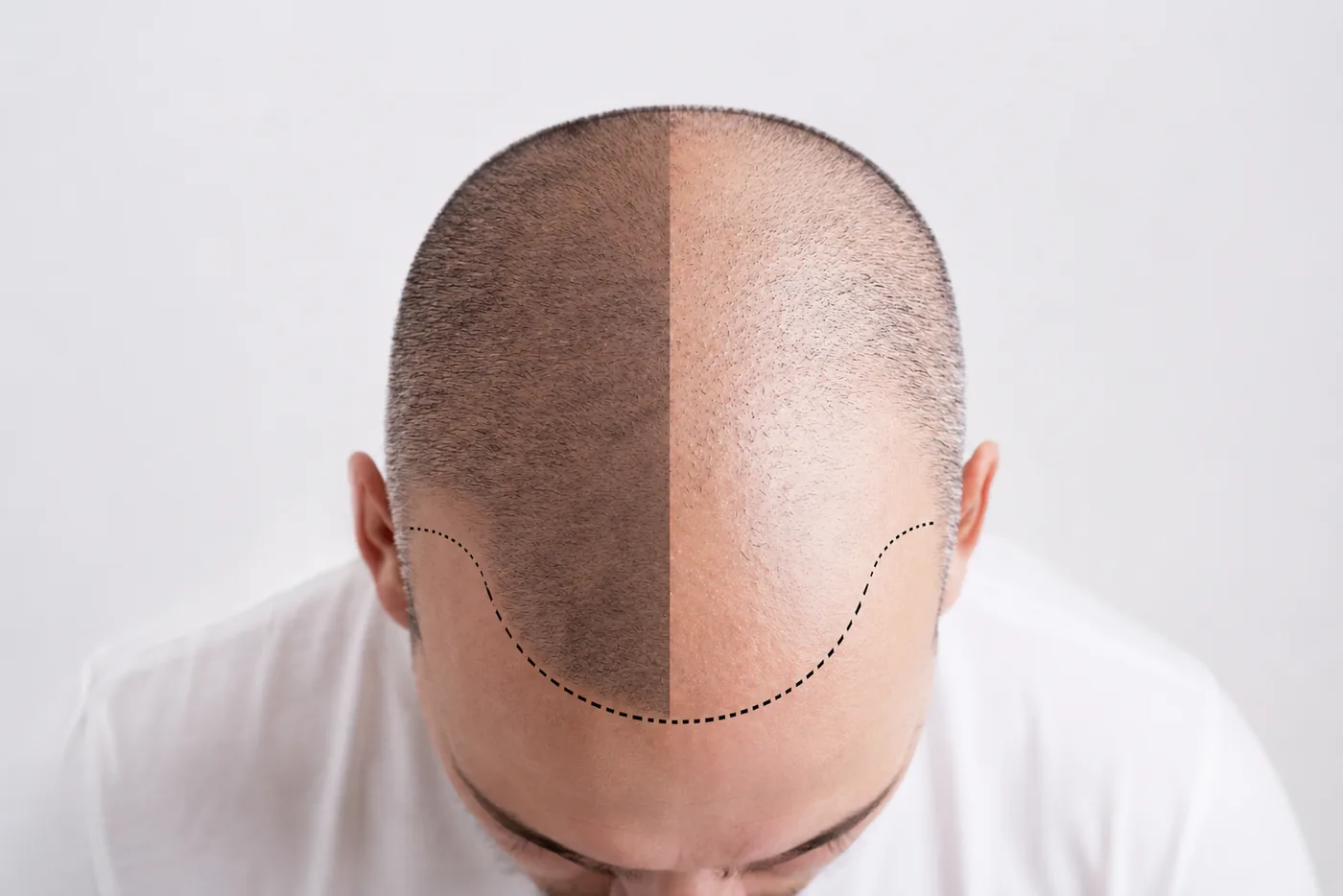
It helps to separate FUE recovery into two overlapping clocks. The healing clock covers the donor and recipient skin: tiny wounds close, scabs fall away, redness fades. With FUE, most of this is done within two weeks. The growth clock covers the hair itself: grafts go into a resting phase, shed their hairs, then slowly grow new ones. That takes about 12 months, and up to 18 months for the crown.
Most anxiety after surgery comes from mixing the two up - feeling healed at week 3 and expecting hair, or seeing shedding at week 4 and fearing the grafts have failed.
What does the FUE timeline look like at a glance?
| Time | Donor area | Recipient area | Normal feelings |
|---|---|---|---|
| Days 1–3 | Tiny red dots, some oozing, dressing removed | Grafts visible with small crusts; pink skin | Soreness, tightness, forehead swelling |
| Days 4–10 | Dots scab and close; hair starts regrowing | Crusts loosen with washing; grafts anchoring | Itching; swelling fades |
| Weeks 2–3 | Mostly healed; short hair covers dots | Scabs gone; stubble-like hairs; redness fading | Feeling normal; some numbness |
| Weeks 2–8 | Looks like a normal short haircut | Transplanted hairs shed | Worry that grafts failed - this is expected |
| Months 3–4 | Settled | Fine, wispy new hairs; occasional pimples | Impatience |
| Months 5–8 | Settled | Visible growth; hair thickening and lengthening | Encouragement |
| Months 9–12 | Settled | Hair matures, texture normalises | Near-final result |
| Months 12–18 | Settled | Crown and late grafts finish maturing | Final assessment |
What happens in the first 10 days?
This is the critical window for graft security. Grafts are held in place by a natural clot for the first few days and become firmly anchored at around 7–10 days.
- Night 1: the most sore point as anaesthetic wears off; sleep with your head raised
- Days 2–4: swelling may appear on the forehead and around the eyes; first gentle wash is often done around day 2–3
- Days 5–7: swelling fades; itching increases as crusts form; donor area feels much better
- Days 8–10: crusts soften and start to lift with washing; most people are comfortable returning to desk work
Your clinic's instructions come first, but our FUE aftercare guide covers the typical routine in detail.
How does the FUE donor area heal?
This is where FUE recovery is noticeably easier than FUT. Instead of a stitched incision, the donor area has many small round wounds, each around 1 mm across. They typically scab within a few days and close within about a week. Because the area is usually trimmed short, the dots are visible for 7–10 days, then disappear under regrowing hair.
Some patients have temporary numbness or tingling in the donor area for a few weeks. Pinkness can last a little longer in fair skin. Long-term, well-spaced extractions leave tiny white dot scars that are usually hidden by hair a few millimetres long. See hair transplant scars for more. By contrast, FUT patients typically deal with a tight, sutured strip for 10–14 days.
Why does transplanted hair fall out after FUE?
The stress of being moved pushes most grafts into a resting (telogen) phase. The hair shaft falls out, usually between weeks 2 and 8, while the living follicle stays under the skin. This shedding is expected and doesn't mean the grafts have failed.
Some patients also get shock loss - temporary shedding of native hair around the recipient or donor area. Most of it regrows within a few months, although hair that was already very miniaturised may not return. That's one reason surgeons often recommend medication to support native hair.
When does new hair start growing?
New hairs usually begin to appear from around month 3, though some patients see them earlier and some later. Early growth tends to be fine, thin and sometimes curly or wiry. It often comes in unevenly, with some zones ahead of others.
Between months 4 and 8, hairs lengthen and thicken, and density builds. By month 6 most people can see a clear difference. From months 9 to 12, hair continues to mature in texture and calibre. The crown grows more slowly and can keep improving until around 18 months. Folliculitis - small pimples as hairs break the surface - is common in months 2–4 and usually settles by itself.
When can you return to normal activities after FUE?
| Activity | Typical return |
|---|---|
| Desk work, remote work | 2–5 days |
| Office work without visible scabs | 10–14 days |
| Walking, light activity | A few days |
| Gym, running, cycling | Light after 1–2 weeks; full after 2–4 weeks |
| Swimming, sauna | About 2–4 weeks |
| Contact sports, helmets | Often 3–4 weeks or longer |
| Scissor haircut | Around 3–4 weeks |
| Clippers on the recipient area, hair dye | Often 4–8 weeks |
These are common guidelines; your surgeon may advise differently depending on graft count and healing.
What could slow your FUE recovery?
- Smoking, which reduces blood flow to healing grafts
- Scratching or picking scabs in the first two weeks
- Heavy sweating, sunburn or swimming too soon
- Skipping prescribed medication or washing routines
- Uncontrolled medical conditions such as diabetes
- Infection - watch for increasing pain, heat, pus or fever after day 3
If growth still looks poor after 12 months, read failed FUE hair transplants for next steps.
Most of these factors are within your control. Stopping smoking before surgery, setting reminders for saline sprays and washes, and planning a quiet, indoor first week go a long way toward a smooth recovery. If you're unsure whether something is normal, send your clinic a photo - most would rather check early than see a problem late.
How do you plan your own FUE recovery?
Book surgery with enough time off, a quiet first week and at least 12 months before any event where you want to look your best. Request a free quote to compare vetted US FUE surgeons and ask how they support patients through each stage.
Related guides
Frequently asked
The small extraction wounds usually scab within days and close within about a week. Short donor hair covers the dots after roughly 10–14 days, and any remaining pinkness fades over the following weeks.
Most grafts are firmly anchored by about 7–10 days. Before that, avoid scratching, rubbing or knocking the recipient area, and follow your clinic's washing instructions.
Yes. Many patients see little or only very fine growth at 3 months. The most noticeable changes usually happen between months 5 and 9.
It's the stretch from roughly week 3 to month 4, when transplanted hairs have shed and new growth is sparse or patchy. It's temporary and a normal part of the process.
Donor redness typically fades in 1–3 weeks. Recipient redness usually settles within a few weeks but can linger for a few months in fair skin.
Skin healing is similar, though larger sessions can bring more swelling and a slightly longer period before scabs clear. The hair growth timeline is the same regardless of session size.
FUE usually has a quicker, more comfortable donor recovery than FUT. For the broader picture across techniques, see the general hair transplant recovery timeline.
About this guide
This is an independent overview to help you decide. Figures are typical US ranges, not a quote, and general information is not medical advice - confirm details at a consultation. See our methodology and disclosure.