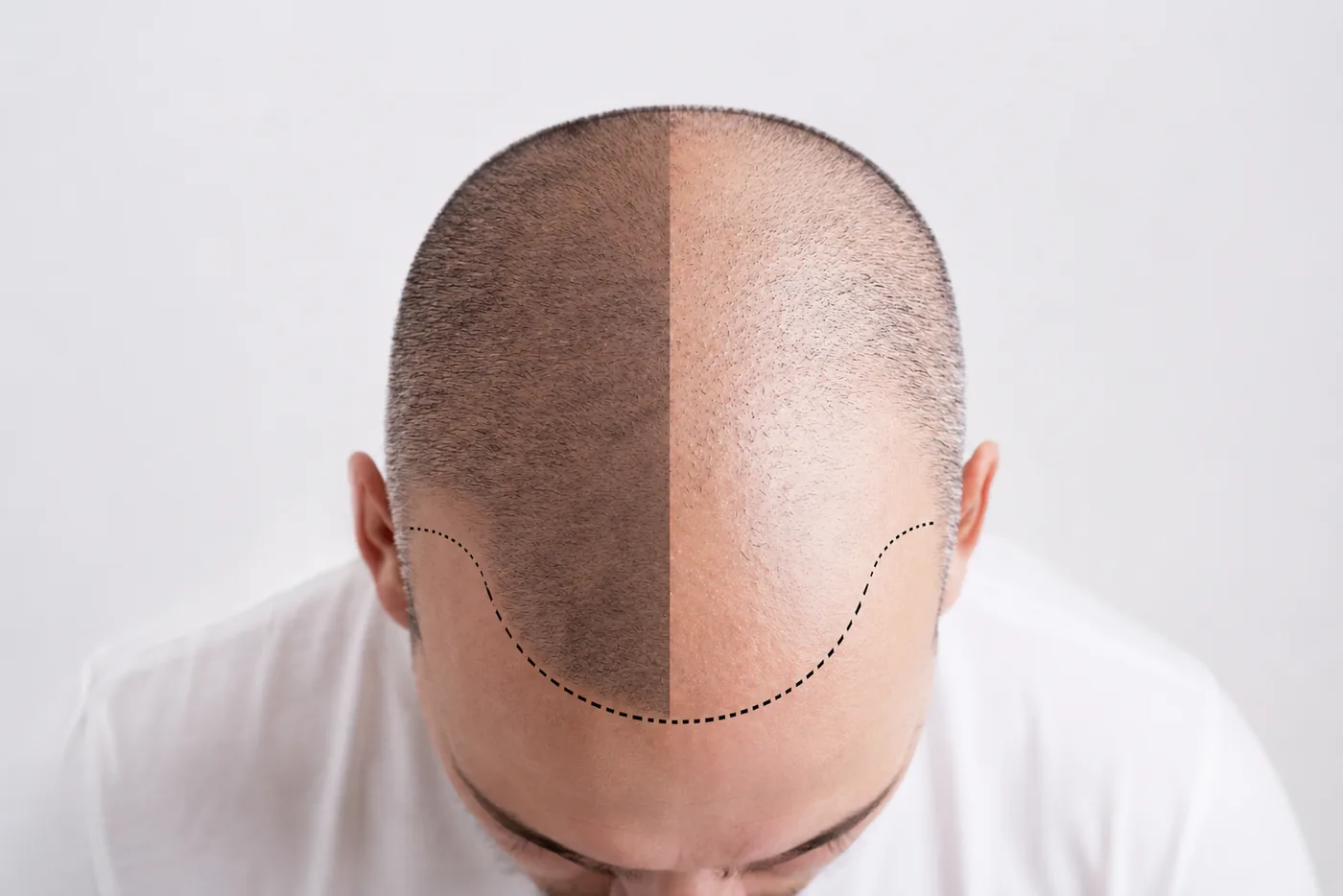
What types of hair restoration procedures are there?
It helps to group procedures by what they actually do:
- Surgical procedures move permanent follicles from one area to another - FUE, FUT and their variations
- Regenerative and injection procedures aim to support or strengthen existing follicles - PRP, PRF and experimental stem cell or exosome treatments
- Device-based procedures use light or energy - low-level laser therapy and some newer scalp devices
- Cosmetic procedures create the appearance of hair without growing it - scalp micropigmentation and hair systems
Medications such as minoxidil and finasteride aren't procedures, but they underpin most treatment plans and are often combined with the options below. For a technique-focused overview, see hair restoration techniques.
Whatever you choose, a correct diagnosis should come first. Several types of hair loss - including thyroid-related thinning, iron deficiency and some forms of alopecia areata - respond to medical treatment rather than procedures.
How do the main procedures compare?
| Procedure | What it does | Typical US cost | Permanence |
|---|---|---|---|
| FUE transplant | Moves individual follicles to thinning areas | About $5–$8 per graft; $4,000–$15,000+ total | Transplanted hair usually lifelong |
| FUT transplant | Moves follicles harvested from a strip of scalp | About $3–$6 per graft | Transplanted hair usually lifelong |
| Beard or facial transplant | Adds hair to patchy beard or moustache | $3,000–$7,000 | Usually lifelong |
| Eyebrow transplant | Restores thin or over-plucked brows | $2,000–$4,000 | Usually lifelong; needs trimming |
| PRP injections | Concentrated platelets injected to support follicles | About $500–$1,500 per session | Needs ongoing maintenance |
| Low-level laser therapy | Light energy to stimulate follicles | Varies - home devices or clinic sessions | Benefit stops if use stops |
| Scalp micropigmentation | Tattooed dots mimic hair stubble or density | Varies by area | Long-lasting; fades and needs touch-ups |
| Stem cell or exosome treatments | Marketed as regenerative scalp injections | Varies widely | Experimental; not FDA-approved for hair loss |
What are the surgical procedures?
FUE (Follicular Unit Extraction)
Follicles are removed one by one with a small punch and implanted into tiny incisions. FUE leaves small dot scars, suits short hairstyles and has a quick donor recovery. Variations include DHI (implanter pen placement), sapphire FUE (sapphire blades for sites), robotic-assisted FUE and unshaven FUE. Read what is FUE.
FUT (Follicular Unit Transplantation)
A strip of scalp is removed from the back of the head, dissected into grafts under microscopes, and implanted. FUT is often cheaper per graft and efficient for large sessions, but leaves a linear scar. See FUT vs FUE.
Facial and body hair transplants
The same techniques restore beards, moustaches, sideburns and eyebrows, or camouflage scars. Body or beard hair can sometimes be used as extra donor supply for the scalp.
Older surgical approaches
Scalp reduction and large "plug" grafts were used decades ago but have largely been replaced by follicular unit techniques, which give far more natural results. Many repair cases today involve correcting old plugs.
What are the non-surgical in-office procedures?
PRP (platelet-rich plasma) uses your own blood, spun to concentrate platelets, which is then injected into the scalp. A common schedule is 3–4 monthly sessions followed by maintenance every 4–6 months or so. Evidence is promising but mixed, and results vary between people. Learn more in PRP hair restoration.
PRF (platelet-rich fibrin) is a related preparation with a different processing method; evidence is still developing.
Stem cell and exosome treatments are heavily marketed but experimental and not FDA-approved for hair loss. Be cautious of high prices and strong claims.
Low-level laser therapy is available as caps, helmets or in-clinic sessions. Results tend to be modest and require consistent ongoing use.
What cosmetic procedures hide hair loss?
Scalp micropigmentation (SMP) uses tiny pigment deposits to recreate the look of a closely shaved head, add the impression of density to thinning hair, or disguise transplant scars. It's non-surgical and has little downtime, but it doesn't grow hair and will fade over years.
Hair systems - modern non-surgical hairpieces bonded to the scalp - can give instant full coverage but need regular maintenance and replacement.
Which procedure suits which type of hair loss?
- Receding hairline with good donor hair: FUE or FUT, often with medication
- Early thinning, not yet bald: medication first; PRP or laser as possible add-ons
- Diffuse thinning in women: diagnosis and medical treatment first; transplant only in select cases
- Advanced baldness with limited donor: transplant to the front, SMP to add density, or a hair system
- Scars from surgery or injury: FUE into the scar, or SMP
- Patchy beard or thin eyebrows: facial FUE
- Want no surgery at all: medication, PRP, laser, SMP or hair systems
Our types and options hub helps match treatments to specific situations.
Can procedures be combined?
Yes, and many good plans use more than one. A common combination is FUE for the hairline, finasteride and minoxidil to protect native hair, and optional PRP during recovery. Patients with advanced loss sometimes add SMP after the transplant matures to soften see-through areas. The key is sequencing: diagnose first, stabilise loss where possible, then use surgery where it adds the most value.
Be realistic about ongoing costs, too. Surgery is a large one-off expense, while PRP, laser devices and medication are smaller but repeat for as long as you want the benefit. Over five or ten years, the totals can be closer than they first appear, so compare the long-term picture rather than just the first bill.
How do you choose the right procedure?
Start with a diagnosis from a board-certified dermatologist or experienced hair restoration surgeon. Be wary of any clinic that offers only one procedure and recommends it to everyone. Ask each provider what they'd suggest if their preferred procedure wasn't available - the answer tells you a lot. Request a free quote to compare recommendations from vetted US hair restoration providers.
Related guides
Frequently asked
For moving permanent hair into bald areas, a hair transplant (FUE or FUT) is the most effective option. For slowing loss, medication has the strongest evidence. The best choice depends on your diagnosis.
Low-level laser therapy and topical treatments are the least invasive. Among in-office procedures, PRP injections and scalp micropigmentation involve no surgery and minimal downtime.
Minoxidil and finasteride are FDA-approved for hair loss, and some laser devices are FDA-cleared. Stem cell and exosome hair treatments are not FDA-approved and remain experimental.
They typically last only as long as you continue treatment. PRP usually needs maintenance every 4–6 months or so, and medication benefits fade after stopping.
Yes. Many women benefit from medication, PRP or laser therapy, and some are good transplant candidates. Diagnosis matters because diffuse thinning often isn't suited to surgery. See female hair restoration.
It can be for people who like a shaved look, have limited donor hair, or want to avoid surgery. It doesn't grow hair and needs occasional touch-ups as pigment fades.
About this guide
This is an independent overview to help you decide. Figures are typical US ranges, not a quote, and general information is not medical advice - confirm details at a consultation. See our methodology and disclosure.