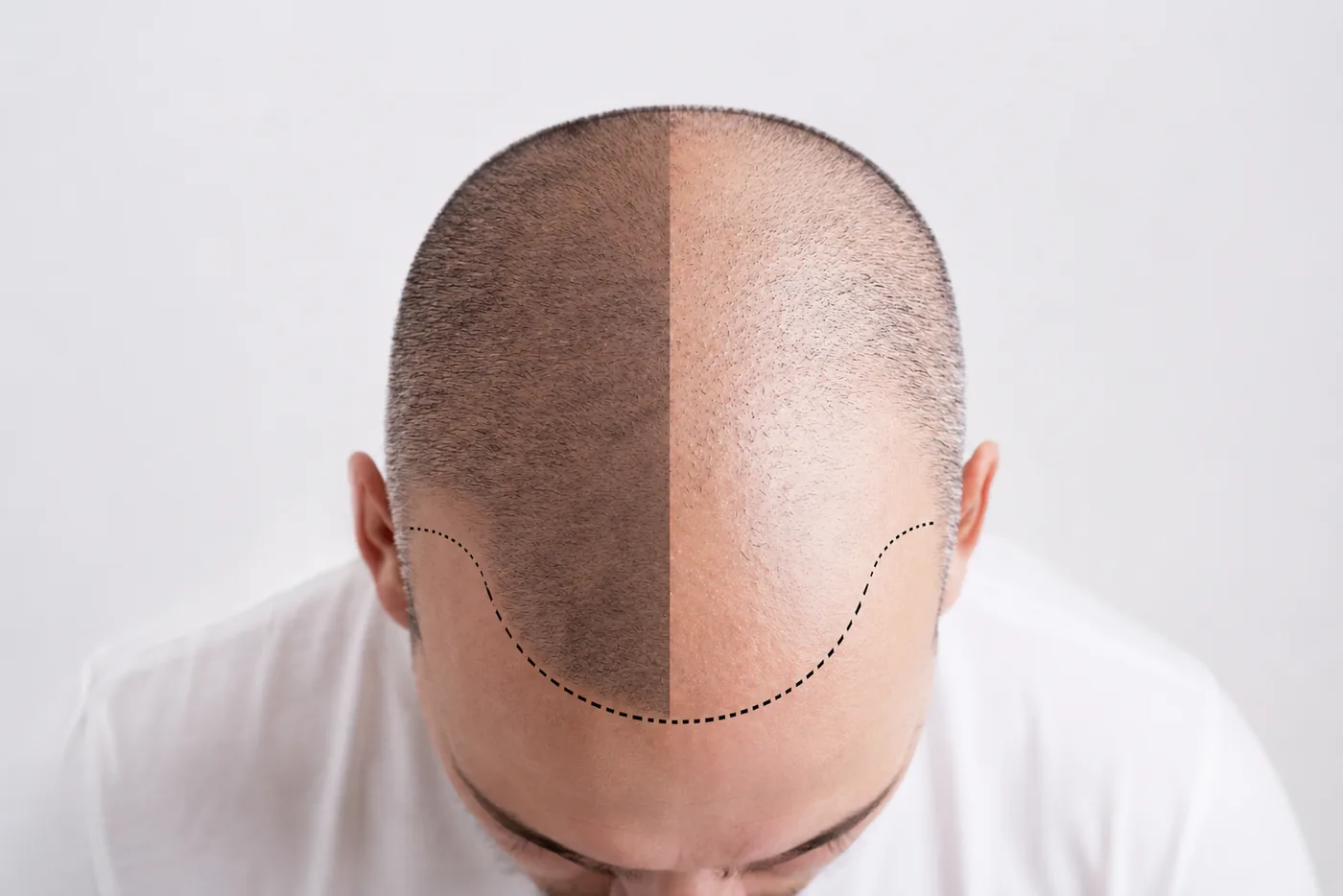
Is there a minimum age for a hair transplant?
Legally, adults can have the procedure at 18. Medically, most reputable surgeons are cautious with anyone under about 25, and some won't operate on patients in their early twenties at all unless the loss is limited and clearly defined.
The reason is simple: at 20 or 22, nobody can predict how far your hair loss will go. A hairline designed for a young man with early recession can look out of place 15 years later if the crown and mid-scalp go bald behind it. Surgery can't be undone, and donor hair is finite.
Why do surgeons worry about going too young?
Early hair loss is often the most aggressive. Men who start losing hair in their late teens or early twenties are more likely to progress to advanced stages. Operating early creates several risks:
- Chasing the hairline: the transplanted zone stays put while native hair behind it recedes, leaving an unnatural gap
- Unrealistic hairline requests: younger patients often want a low, straight, teenage hairline that won't suit them later in life
- Donor depletion: using thousands of grafts early leaves too few for the crown or future sessions
- Unclear diagnosis: thinning in your early twenties can sometimes be stress, illness, or diet-related shedding rather than pattern loss
- Shock loss: surgery can temporarily shed nearby miniaturised native hair, which in a young patient may not all return
This is one of the most common routes to a disappointing long-term result - see whether transplants are permanent for how native hair loss affects the look.
What does each age group need to consider?
| Age range | Typical surgical view | Key considerations |
|---|---|---|
| 18–24 | Usually advised to wait | Loss pattern unpredictable; try medical treatment first; conservative plan only if surgery goes ahead |
| 25–30 | Possible for suitable candidates | Family history and progression speed matter; medication often recommended alongside |
| 30–45 | Often a good window | Pattern usually clearer; realistic hairline design; plan for possible second session |
| 45–60 | Frequently good candidates | Loss often stabilised; donor density and general health checked |
| 60+ | Case by case | Health screening, medications and healing speed; donor may be thinner |
These are general guidelines, not rules. A 26-year-old with a stable Norwood 3 and a strong family history of limited loss may be a better candidate than a 40-year-old whose hair is still falling fast.
Is there an upper age limit?
No fixed limit. Healthy patients in their sixties and seventies have transplants regularly. What surgeons look at instead is:
- General health, including heart conditions, diabetes and blood pressure control
- Medications, especially blood thinners, which may need medical advice before surgery
- Donor density, which often thins with age and limits how many grafts are available
- Skin quality and healing capacity
- Goals - older patients often want framing and coverage rather than maximum density, which suits a smaller session
Because the pattern is usually settled, older patients can actually get some of the most predictable results. Recovery follows the same timeline as for younger patients, though some surgeons allow a little extra time for the donor area to settle.
Does age affect how good the result looks?
Age affects the design more than the growth. Graft survival is broadly similar across healthy adults, but what looks natural changes. A mature hairline sits higher at the temples and has a slightly irregular, softer edge; a hairline that suits a 22-year-old can look obviously transplanted on a 55-year-old. Hair characteristics matter too - coarse, wavy or salt-and-pepper hair often gives an impression of more coverage per graft than fine, dark hair against pale skin.
What should you do if you're young and losing hair?
Start with diagnosis and medical treatment rather than surgery. A board-certified dermatologist can confirm whether it's pattern hair loss and rule out thyroid, iron, or other causes. From there, common first steps are:
- Photograph your hairline and crown in consistent lighting every three months to track progression.
- Discuss minoxidil and finasteride with a doctor. Finasteride is prescription-only and has possible side effects worth discussing; both only work while you keep using them.
- Give treatment 6–12 months to show whether loss is slowing.
- Revisit surgery once the pattern is clearer - typically a few years later.
Signs worth taking to a doctor are covered in signs and symptoms of hair loss.
How does age change the treatment plan?
Age shapes three big decisions. The hairline is set higher and softer in younger patients to allow for future loss. The graft budget is managed so enough donor hair remains for later sessions - a younger patient's plan should assume they may need more work. And the technique may differ: FUE suits patients who want to keep hair short, while FUT can yield more grafts in one session for those with extensive needs. See FUE vs FUT.
Cost doesn't change with age - US procedures typically run $4,000–$15,000 depending on graft count - but younger patients should budget for the likelihood of a second procedure.
What questions should you ask about age at consultation?
- Based on my age and family history, how far do you expect my loss to progress?
- How will you design the hairline so it still looks natural in 20 years?
- How many grafts will I have left for future sessions after this one?
- Would you recommend waiting or trying medication first?
- What would you do if I lose more hair behind the transplanted area?
A surgeon who tells a 21-year-old to wait is usually a good sign. One who promises a full, low hairline to anyone who walks in is not. Our guide to choosing a provider covers more red flags.
How do you find out if you're ready?
The only reliable answer comes from an in-person or video assessment of your scalp, donor area and history. Request a free quote to compare consultations with vetted US surgeons who will give you an honest view on timing.
Related guides
Frequently asked
It's legally possible, but most ethical surgeons advise waiting. At 20, the final extent of hair loss is unknown, and early surgery risks an unnatural look later. Medical treatment is usually tried first.
No. Many patients in their fifties are excellent candidates because their loss pattern has stabilised. Surgeons will check general health, medications and donor density before recommending surgery.
Patients around Norwood 3–5 with a stable pattern and good donor hair often get the most satisfying results. Very advanced stages may need more grafts than the donor area can supply. See graft estimates.
Pattern hair loss rarely stops completely, but it often slows. Surgeons look for a predictable pattern rather than a full stop, and many recommend medication to slow further thinning.
Younger, healthy patients often heal a little faster, but the difference is small. Smoking, general health and following aftercare instructions matter more than age.
There's no typical age. Women are more often assessed on the type of thinning than age - diffuse loss usually isn't suitable. Read about female hair transplants.
Transplanted grafts usually keep growing for life, though hair may become slightly finer and greyer with age, just like the donor hair it came from.
About this guide
This is an independent overview to help you decide. Figures are typical US ranges, not a quote, and general information is not medical advice - confirm details at a consultation. See our methodology and disclosure.
