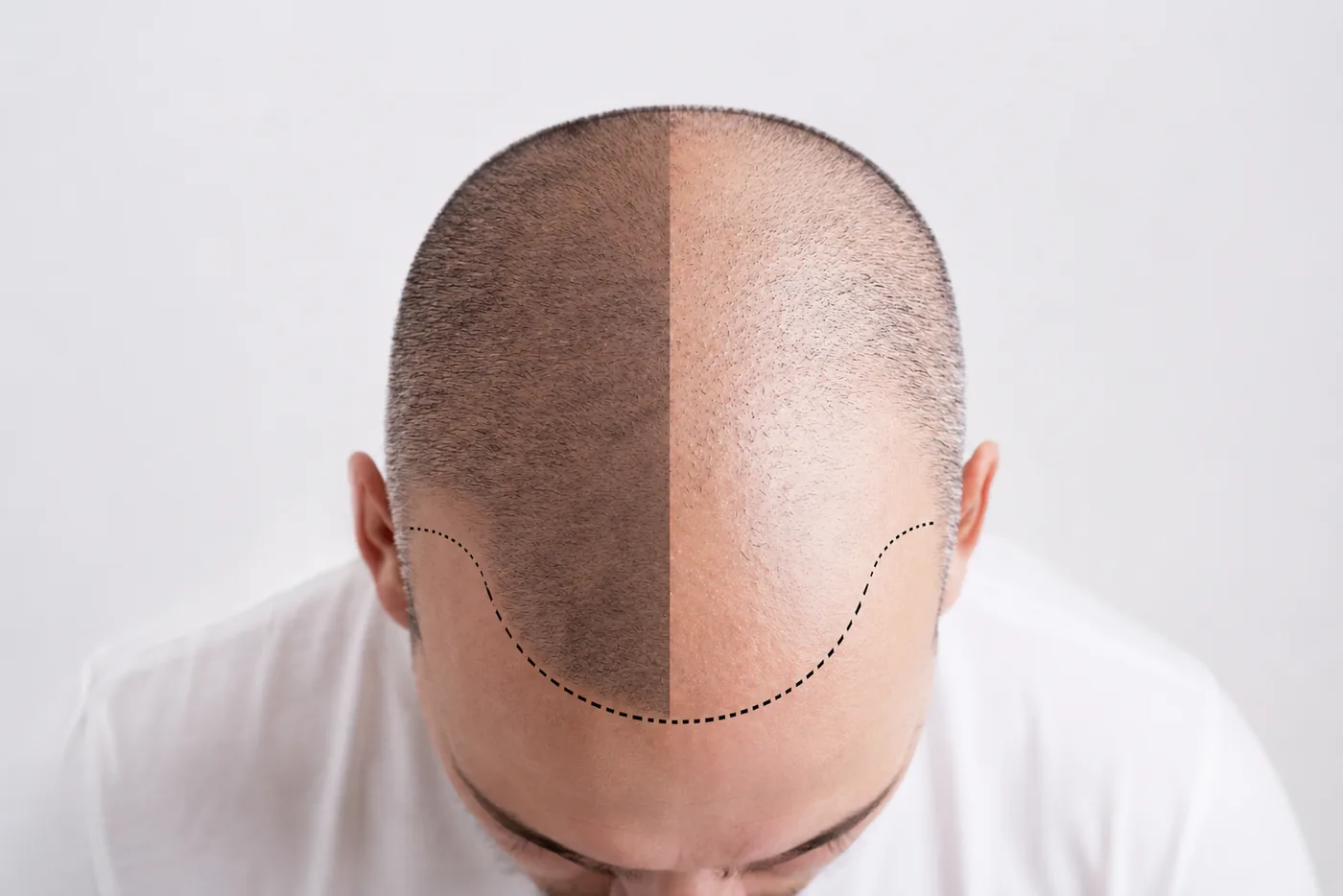
What are the stages of the hair restoration process?
Many people think of hair restoration as a single surgery. In practice, it's a longer journey, and the people with the best outcomes usually treat it that way. Here's the full hair restoration process from first worry to long-term care:
| Stage | What happens | Typical timeframe |
|---|---|---|
| 1. Diagnosis | Find the cause and pattern of hair loss | 1–2 appointments; tests if needed |
| 2. Medical treatment | Stabilise loss with medication, sometimes PRP or laser | Usually 6–12 months to judge effect |
| 3. Consultation and planning | Compare surgeons, graft estimates and costs | A few weeks to a few months |
| 4. Procedure | FUE or FUT transplant, or a non-surgical plan | One day for surgery (4–8 hours) |
| 5. Recovery and growth | Healing, shedding, regrowth | Healing 2–4 weeks; final result ~12–18 months |
| 6. Maintenance | Protect native hair, review progress, consider future steps | Ongoing |
Not everyone goes through every stage. Some people stop at stage 2 because medication does enough; others arrive with stable loss and move quickly to surgery.
Why does the process start with a diagnosis?
Hair loss has many causes, and not all of them are treated with a transplant. Male- and female-pattern hair loss are the most common, but thinning can also come from thyroid problems, iron deficiency, stress-related shedding (telogen effluvium), alopecia areata, scarring alopecias, medications, or hairstyles that pull on the hair.
A dermatologist or hair restoration physician will typically ask about your family history and the timeline of your loss, examine your scalp - sometimes with magnification - and may order blood tests. Before that appointment, it helps to gather old photos that show how your hair has changed, a list of your medications and supplements, and any recent blood test results. Getting this right matters: transplanting hair into an area affected by an active inflammatory condition can fail, and some causes of shedding resolve on their own once treated. Our signs and symptoms hub explains what different patterns can mean.
Should you try medical treatment before surgery?
For most people with pattern loss, yes - or at least alongside it. Medical treatment slows ongoing loss and can thicken existing hair, which protects any future transplant from being "outrun" by further thinning. Common options include:
- Minoxidil - topical or, under medical supervision, oral; must be continued to keep benefits
- Finasteride - prescription medication for men that reduces DHT; has possible side effects to discuss with a doctor, and benefits stop if you stop
- PRP - usually 3–4 monthly sessions, then maintenance every 4–6+ months, at roughly $500–$1,500 per session; evidence is promising but mixed
- Low-level laser therapy - home devices or clinic sessions, with modest evidence
Stem-cell and exosome hair treatments are experimental and not FDA-approved for hair loss. Treat them as unproven. See non-surgical hair restoration for a full comparison.
What happens during consultation and planning?
If surgery is on the table, this stage is about choosing the right surgeon and the right plan. A thorough consultation typically covers your diagnosis, donor-area density, your goals and hairstyle, a proposed hairline, a graft estimate, the recommended technique, and total cost.
- Shortlist two to four board-certified surgeons with dedicated hair restoration experience.
- Share clear photos or attend in person so each can assess your scalp.
- Compare graft estimates, proposed hairlines and how each plans for future loss.
- Get written, all-in quotes and check financing options if needed.
- Choose a surgery date that allows at least a few days off and about two weeks before important events.
Our choosing a provider hub and graft estimate guide help with this stage.
What happens on procedure day?
A hair transplant is a same-day outpatient procedure under local anaesthetic, usually lasting 4–8 hours. The surgeon confirms the hairline with you, the donor and recipient areas are numbed, grafts are harvested by FUE or FUT, recipient sites are created, and grafts are placed. You'll have breaks for food and the bathroom, and go home the same evening with aftercare instructions. For a detailed walkthrough, see our hair restoration procedure guide.
What does recovery and regrowth involve?
Healing is fairly quick: soreness and swelling settle within days, crusts clear by about day 10–14, and most people are back to full normal activity within 2–4 weeks. Growth is slow. Transplanted hairs typically shed in weeks 2–4, new growth begins around month 3, a visible change arrives at about 6 months, and the final result is judged at about 12 months, or up to 18 for the crown. The recovery timeline breaks this down.
Why is maintenance part of the process?
Transplanted hair from the donor area usually lasts long term, but your non-transplanted hair can keep thinning. That's why the process doesn't really end at 12 months. Long-term care often involves:
- Continuing minoxidil or finasteride if they're part of your plan
- Annual or periodic check-ins with your hair restoration doctor
- Tracking your hair with consistent photos
- Considering a second procedure if loss progresses and donor supply allows
- Protecting your scalp from sunburn, especially in thinner areas
Read more in the maintenance hub.
How much does the whole process cost?
Costs build across stages. Diagnosis may involve a consultation fee and blood tests. Medical treatment adds ongoing monthly costs. A US transplant typically costs $4,000–$15,000 depending on graft count, and insurance almost never covers it, though financing over 24–48 months is common. Budget for aftercare products, medications and any future sessions too, as well as travel and time off work if your chosen surgeon isn't local. See the cost hub.
How do you start the hair restoration process?
Begin with a proper diagnosis, then compare treatment plans from qualified providers. If you're ready to explore surgical or non-surgical options, request a free quote to compare vetted US providers.
Related guides
Frequently asked
From diagnosis to final transplant result, often 12–18 months or more. Medical treatment trials add 6–12 months if tried first, and final transplant results take about 12 months, or up to 18 for the crown.
It isn't always required, but a proper diagnosis is essential. Many hair restoration surgeons diagnose hair loss themselves; if your pattern is unusual or you're a woman with diffuse thinning, a dermatologist is especially valuable.
Some people do, particularly with stable loss. But many surgeons recommend medication to protect surrounding native hair. Finasteride is prescription-only and has possible side effects to discuss with a doctor.
Depending on your history, doctors may examine your scalp with magnification, and order blood tests such as thyroid function, iron levels or hormone levels. A scalp biopsy is occasionally used for unclear cases.
A transplant is often one procedure, but restoration is usually ongoing. Many people continue medication and some choose a second session later if hair loss progresses.
Getting a diagnosis. Understanding the cause and pattern of your hair loss determines whether medication, PRP, surgery or another approach is most likely to help.
About this guide
This is an independent overview to help you decide. Figures are typical US ranges, not a quote, and general information is not medical advice - confirm details at a consultation. See our methodology and disclosure.