Why do women lose hair?
Hair loss in women is common, and it rarely has just one explanation. Several causes can overlap - for example, a woman with a genetic tendency to thin may notice it for the first time after a stressful illness or childbirth. The main groups are:
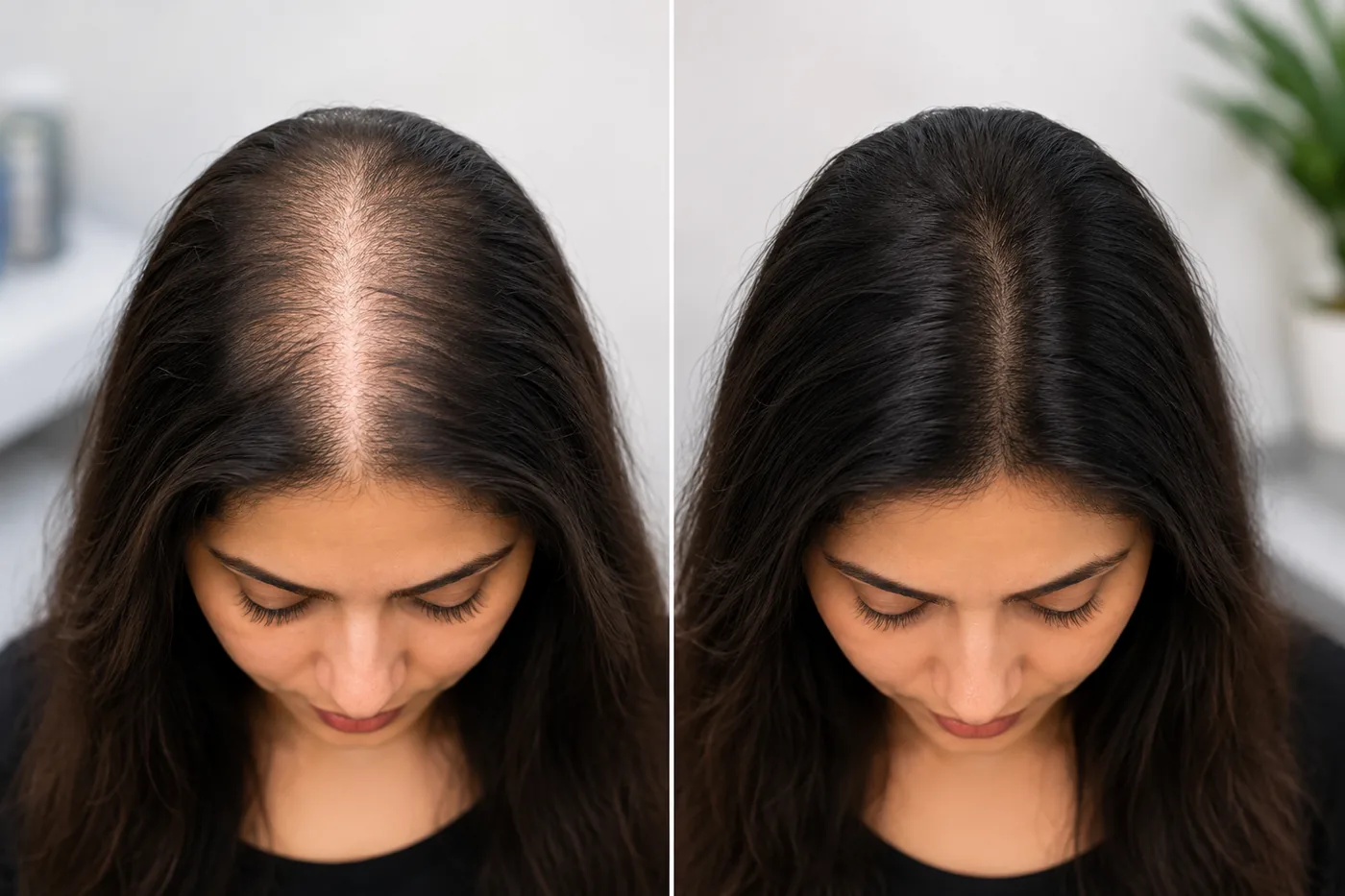
- Female pattern hair loss (androgenetic alopecia) - gradual, inherited thinning, usually most visible on top and along the part
- Telogen effluvium - heavy shedding a few months after a trigger such as illness, surgery, childbirth, crash dieting or major stress
- Nutritional and medical causes - low iron stores, thyroid disorders, and some medications
- Hormonal conditions - such as polycystic ovary syndrome (PCOS)
- Traction alopecia - loss from repeated pulling by tight hairstyles, extensions or weaves
- Autoimmune and scarring conditions - such as alopecia areata, lichen planopilaris and frontal fibrosing alopecia
How can you tell which type of hair loss you have?
The pattern and speed of loss give useful clues, although only a doctor can confirm a diagnosis. This table shows how the common causes typically present:
| Cause | Typical pattern | Usual first approach |
|---|---|---|
| Female pattern hair loss | Slowly widening part, thinner crown; hairline often preserved | Minoxidil, sometimes prescription medication |
| Telogen effluvium | Sudden, diffuse shedding; more hair in the brush and shower | Identify and remove the trigger; often recovers on its own |
| Iron deficiency or thyroid disorder | Diffuse thinning, sometimes with tiredness or other symptoms | Blood tests and treatment of the underlying problem |
| Traction alopecia | Thinning at temples, hairline or where hair is pulled | Stop the tension; transplant if loss is permanent |
| Alopecia areata | Smooth, round bald patches that appear quickly | Dermatology treatment |
| Scarring alopecias | Receding hairline or patches with redness, itching or shiny skin | Urgent dermatology care to stop progression |
If you notice pain, burning, redness or scaling with your hair loss, or bald patches appearing quickly, see a doctor promptly. Scarring conditions can destroy follicles permanently if they aren't treated early.
What does a proper hair-loss workup involve?
A thorough assessment usually follows these steps:
- History. When the loss started, how fast it's progressing, family history, recent illness, pregnancy, weight change, diet, medications and hairstyling habits.
- Scalp examination. The doctor looks at the pattern, the part width and the scalp skin.
- Pull test. Gently tugging small sections of hair shows whether there's active shedding.
- Trichoscopy. A magnified view reveals miniaturised hairs, broken hairs or signs of inflammation.
- Blood tests. Often iron stores (ferritin), thyroid function, vitamin D and, if symptoms suggest it, hormone levels.
- Biopsy when the diagnosis is uncertain or scarring is suspected.
Which doctor should you see for female hair loss?
A board-certified dermatologist, ideally one with a special interest in hair, is the best starting point for diagnosis. Your primary care doctor can order initial blood tests and may refer you on. If a hormonal condition such as PCOS is suspected, a gynaecologist or endocrinologist may be involved too.
Hair transplant surgeons come in once a diagnosis is confirmed and surgery is being considered. Some practices combine both roles. Learn what to look for in our hair restoration dermatologist guide.
How do hormones and life stages affect women's hair?
Hormones influence the hair cycle throughout a woman's life. During pregnancy, many women notice thicker hair because fewer hairs enter the shedding phase. Two to four months after birth, those hairs shed together, and postpartum shedding can be dramatic. It usually settles within months, though a doctor should check iron levels if it lingers.
Starting or stopping hormonal contraception can trigger shedding in some women. PCOS can cause androgen-related thinning on the scalp alongside other symptoms. Around perimenopause and menopause, falling oestrogen levels can make pattern thinning more noticeable. Knowing where you are in these changes helps a doctor decide whether to wait, investigate or treat.
Can hairstyles cause permanent hair loss?
Yes. Repeated tension from tight ponytails, buns, braids, cornrows, weaves, extensions and some wigs can lead to traction alopecia, most often at the temples and hairline. Early on, the loss is reversible if the pulling stops. After years of tension, follicles can scar and stop producing hair permanently.
Chemical relaxers, frequent bleaching and high heat damage the hair shaft and can cause breakage that looks like thinning, though it doesn't usually destroy follicles. Warning signs of traction include tenderness, small bumps around follicles, and a fringe of short broken hairs along the hairline. Permanent traction loss is one of the situations where women tend to be good transplant candidates.
Will your hair grow back without treatment?
It depends on the cause. Telogen effluvium typically improves once the trigger has passed, although regrowth can take many months to look full. Hair loss from low iron or thyroid problems often improves after those are treated. Female pattern hair loss, on the other hand, tends to progress slowly without treatment, and scarring alopecias cause permanent loss in affected areas. That's why waiting and hoping is fine for some women and a costly delay for others.
Once you have a diagnosis, what are the restoration options?
- Medical treatment - minoxidil and, where appropriate, prescription medication
- PRP - an optional add-on with promising but mixed evidence; see platelet-rich plasma hair restoration
- Low-level laser devices - modest benefit with consistent use
- Hair transplant - for localised, stable loss with a strong donor area
- Cosmetic coverage - toppers, fibres and styling while treatment takes effect
Our female hair restoration guide compares these options side by side.
What's the next step?
Start with a dermatologist appointment and ask for a full workup rather than a product recommendation. If your diagnosis points toward surgery, collect opinions from surgeons who treat women regularly. You can request free quotes from vetted US providers when you're ready to compare.
Related guides
Frequently asked
Female pattern hair loss (androgenetic alopecia) is the most common long-term cause. Telogen effluvium, a temporary shedding triggered by stress, illness or childbirth, is also very common and often overlaps with it.
Doctors commonly check ferritin (iron stores), thyroid function, a full blood count and vitamin D. Hormone tests may be added if there are signs of PCOS, such as irregular periods or acne.
Losing roughly 50–100 hairs a day is often described as normal, and it can look like more on wash days. Sudden handfuls, a widening part or visible scalp are reasons to get checked.
Yes. A major physical or emotional stress can push many hairs into the resting phase, leading to heavy shedding two to three months later. It usually recovers once the stress passes.
In most women, yes. Postpartum shedding typically peaks a few months after birth and settles within the following months. If it continues well beyond that, ask a doctor to check iron and thyroid levels.
Both an underactive and an overactive thyroid can cause diffuse thinning. Hair often improves once thyroid levels are properly treated, though regrowth takes several months.
Female pattern hair loss has a strong genetic component and can be inherited from either parent. A family history makes it more likely, but it doesn't mean treatment won't help.
About this guide
This is an independent overview to help you decide. Figures are typical US ranges, not a quote, and general information is not medical advice - confirm details at a consultation. See our methodology and disclosure.