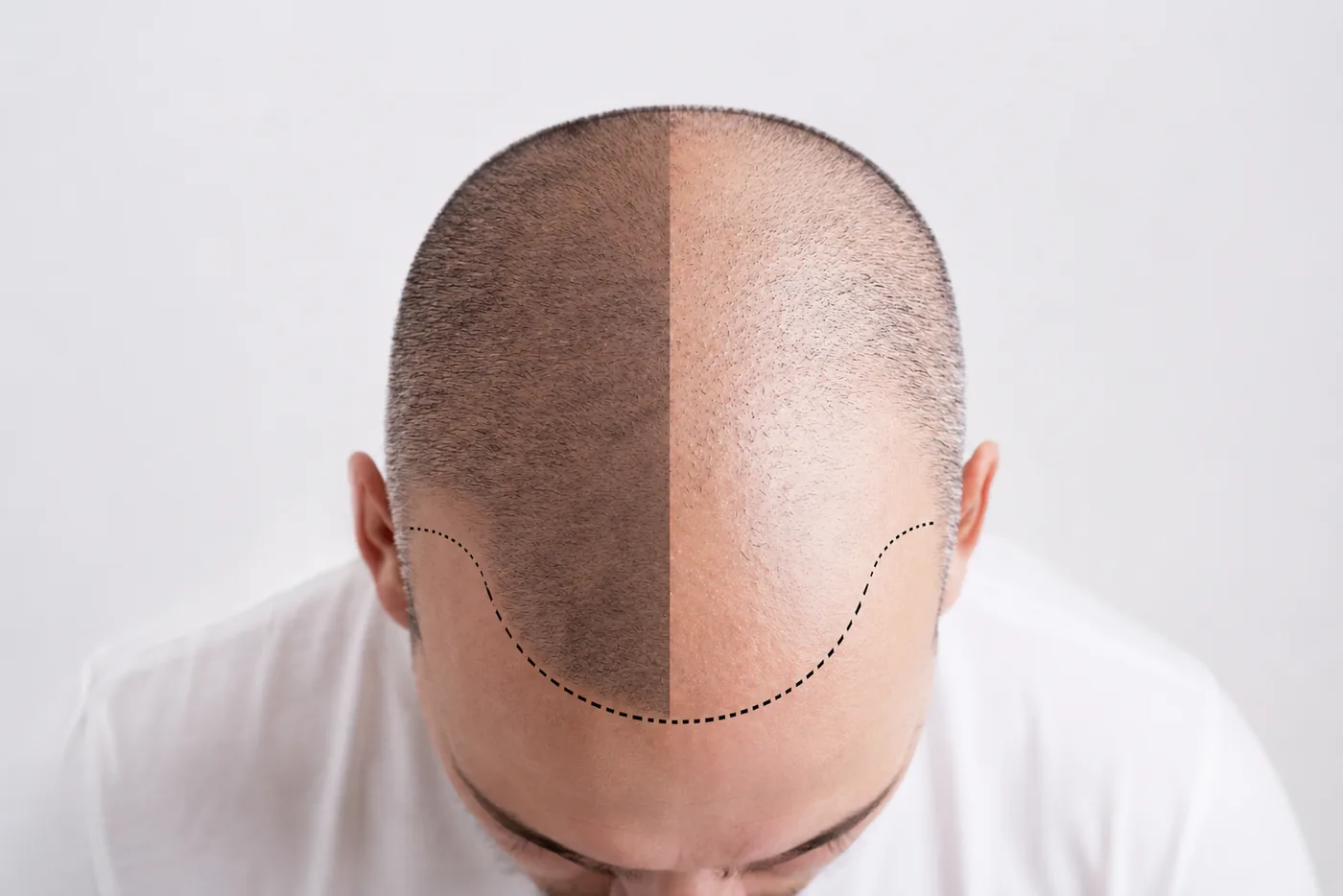
What is a hair restoration procedure?
When people talk about "the" hair restoration procedure, they usually mean a hair transplant: a same-day outpatient surgery in which follicles are harvested from a permanent donor zone and implanted where hair has thinned. It's typically done under local anaesthetic, takes 4–8 hours and doesn't require an overnight hospital stay.
There are two main harvesting techniques - FUE, which removes follicles individually, and FUT, which removes a strip of scalp - but the goal and principles are the same. If you want to compare every surgical and non-surgical option, see hair restoration procedures. This page focuses on deciding whether a surgical procedure is right for you and getting through it safely.
Are you a candidate for a hair restoration procedure?
Surgery isn't right for everyone with thinning hair. Surgeons generally look for:
- A confirmed diagnosis of pattern hair loss or another stable, suitable condition such as scarring from injury
- Adequate donor hair - density and quality on the back and sides
- A predictable pattern of loss, often easier to judge after about age 25
- Good general health, with conditions like heart disease, diabetes or bleeding disorders managed
- Realistic expectations about density, coverage and the time results take
- Commitment to aftercare and, often, ongoing treatment to protect native hair
People who are often advised against surgery, at least for now, include those with diffuse unpatterned thinning, active alopecia areata, very limited donor hair, or rapidly progressing loss at a young age. Age is discussed in the best age for a hair transplant.
How do you choose between FUE and FUT?
| Consideration | FUE | FUT |
|---|---|---|
| Donor scarring | Small scattered dots | Single linear scar |
| Typical US price per graft | About $5–$8 | About $3–$6 |
| Donor discomfort | Mild, a few days | Tightness for 1–2 weeks |
| Short hairstyles | Usually fine | May reveal scar |
| Large single sessions | Possible, sometimes over two days | Often efficient |
A surgeon who offers both can give the most neutral advice. For the full comparison, read FUE vs FUT.
How safe is a hair restoration procedure?
Hair transplantation is generally considered a low-risk procedure when performed by a qualified physician-led team in an appropriate setting. Because it uses local anaesthetic rather than general anaesthesia, and involves only the skin and hair follicles, serious complications are uncommon. That doesn't mean it's risk-free. Possible issues include:
- Bleeding during or shortly after surgery, usually controlled with pressure
- Swelling of the forehead and around the eyes for a few days
- Infection, uncommon and usually treatable when caught early
- Numbness or tingling in donor or recipient areas, usually temporary
- Folliculitis - small pimples as new hairs emerge
- Shock loss of native hair near treated areas, usually temporary
- Scarring, including visible donor scars if over-harvested
- Poor growth or an unnatural appearance, often linked to planning or technique
- Reactions to anaesthetic or medication, rare but important to discuss
More detail on complications and fixes is in our problems hub.
How do you reduce the risks?
Much of the risk is managed before surgery day, through who you choose and how you prepare:
- Choose a licensed, board-certified physician and check your state medical board for disciplinary history. ISHRS membership is a useful extra signal.
- Confirm who performs each step, and that a physician is present and responsible throughout.
- Disclose your full medical history, including supplements, blood thinners, allergies and previous reactions to anaesthetic.
- Follow pre-op instructions on smoking, alcohol and medications - never stop a prescription without medical advice.
- Ask about the clinic's emergency protocols and what happens if a complication occurs.
- Follow aftercare closely, especially in the first 10–14 days.
What should informed consent cover?
Before surgery, you'll sign consent forms. Don't treat this as a formality. You should understand and be comfortable with:
- The technique being used and why it was chosen
- The planned graft count and the areas being treated
- The hairline design you approved
- The realistic range of outcomes, including the chance of needing further work
- Specific risks and how the clinic handles them
- Photography consent and how images may be used
- Financial terms, refund and touch-up policies
Keep copies of everything you sign, along with your pre-op and aftercare instructions. If anything is unclear, ask for it to be explained again before the day of surgery, not in the chair.
It's also reasonable to ask how many procedures of this type the clinic performs each year and how often patients return with complications. A confident, well-run practice will answer openly.
What does the procedure cost?
US hair transplants typically cost $4,000–$15,000 in total. Small procedures of 500–1,500 grafts are commonly $4,000–$8,000, medium procedures of 1,500–2,500 grafts $8,000–$12,000, and large procedures of 2,500–4,000+ grafts $12,000–$15,000 or more. Insurance almost never covers hair restoration for pattern hair loss, although reconstructive cases after injury or burns may occasionally be assessed differently - check with your insurer. Financing over 24–48 months is widely available. The cost hub has detailed breakdowns.
What happens after the procedure?
Most people return to desk work within 3–7 days. Transplanted hairs shed in weeks 2–4, regrowth starts around month 3, visible change arrives at about 6 months, and the final result is judged at around 12 months, or up to 18 for the crown. Many surgeons recommend continuing minoxidil or finasteride to protect native hair; both must be continued to keep their benefit, and finasteride is prescription-only with possible side effects.
If growth looks patchy at 12 months, talk to your surgeon before considering anything else - many clinics review results and offer touch-ups where appropriate.
How do you take the next step?
Book consultations with at least two qualified surgeons, bring a list of questions about safety and outcomes, and compare their plans side by side. Request a free quote to connect with vetted US hair restoration surgeons.
Related guides
Frequently asked
No. It's an outpatient procedure under local anaesthetic that involves only the skin and follicles. It still carries surgical risks and should be performed by a qualified physician-led team.
Often yes, if it's well controlled. Your surgeon may request medical clearance, because blood pressure affects bleeding and anaesthetic safety. Always disclose your conditions and medications.
Occasionally, reconstructive procedures after burns, trauma or surgery are considered by insurers. Cosmetic treatment of pattern hair loss is almost never covered. Ask your insurer before booking.
Most people take 3–7 days off desk work. Physical jobs or roles where appearance matters may need 10–14 days, until scabs clear and swelling settles.
Look for a current state medical licence, board certification in a relevant specialty, substantial hair restoration experience and consistent results. ISHRS membership is a useful signal. See choosing a provider.
Not truly. Poorly placed grafts can sometimes be removed or treated with laser hair removal, but donor hair used is gone. That's why careful planning matters.
About this guide
This is an independent overview to help you decide. Figures are typical US ranges, not a quote, and general information is not medical advice - confirm details at a consultation. See our methodology and disclosure.