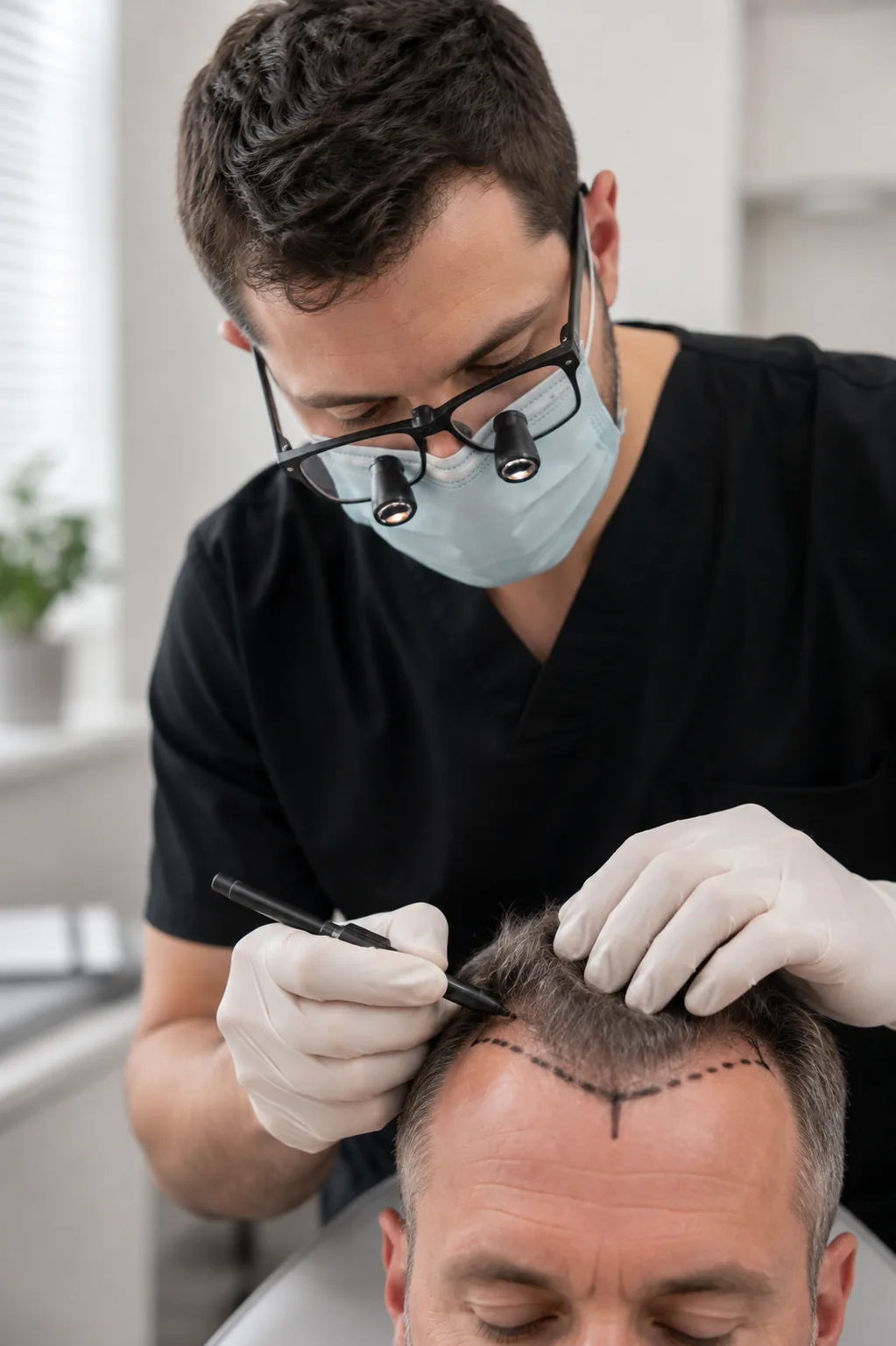
Why do hair transplants fail?
Most poor results trace back to the provider, not the procedure. Common causes are an inexperienced surgeon or unsupervised technicians, poor graft handling, over-harvesting the donor area, placing grafts at the wrong angle or density, or operating on an unsuitable candidate. Poor aftercare can also reduce graft survival.
What are the signs of a failed FUE transplant?
After the normal shedding phase, a failed FUE transplant shows little to no regrowth by 9–12 months, persistent thin patches, or an unnatural hairline. A thinned or scarred donor area is another sign of over-harvesting. If growth hasn't matched expectations by a year, seek a second opinion.
Can a bad or failed hair transplant be fixed?
Often, yes. A corrective or "repair" procedure can add density, redesign an unnatural hairline, or camouflage scarring - sometimes combined with scalp micropigmentation. Results depend on how much donor hair remains, so an honest assessment from an experienced corrective surgeon is essential.
How do I avoid a bad hair transplant result?
Choose the surgeon carefully - it's the single biggest factor. Verify experience and accreditation, review real unretouched cases, insist on a realistic graft plan, and follow aftercare closely. Start with how to choose a clinic and protect your result with good aftercare.
Why results can fade even when the surgery was sound
A transplant relocates follicles; it does not halt loss in the hair around them, which is why a technically good result can still look thin a few years on. The Endotext chapter on male androgenetic alopecia on the NIH’s NCBI Bookshelf notes that the two FDA-approved treatments for the condition in men, topical minoxidil and oral finasteride, prevent further loss but only partially reverse baldness, and that both require continuous use — if treatment stops, the gain is lost within four to six months. Ask any provider how it expects the untransplanted area to behave, because that is the difference between a failed procedure and an unmanaged condition.
Related guides
Common questions
No. Transplanted hairs commonly shed in the first weeks before regrowing from around month three. This "shock loss" is expected - true failure is judged after 9–12 months.
With an experienced, qualified surgeon, poor results are uncommon. Most bad outcomes trace back to inexperienced providers, poor technique, over-harvesting, or unrealistic expectations.
Often, yes. Corrective or repair procedures can improve density, redesign an unnatural hairline, or camouflage scarring, though results depend on remaining donor supply.
Sources & notes
General information to help you recognise and avoid problems - not a diagnosis. If you're worried about your result or healing, consult a qualified surgeon.
- International Society of Hair Restoration Surgery (ISHRS) - complications and repair.
- American Academy of Dermatology (AAD) - hair transplant risks.
- Peer-reviewed literature on graft survival and corrective surgery.
