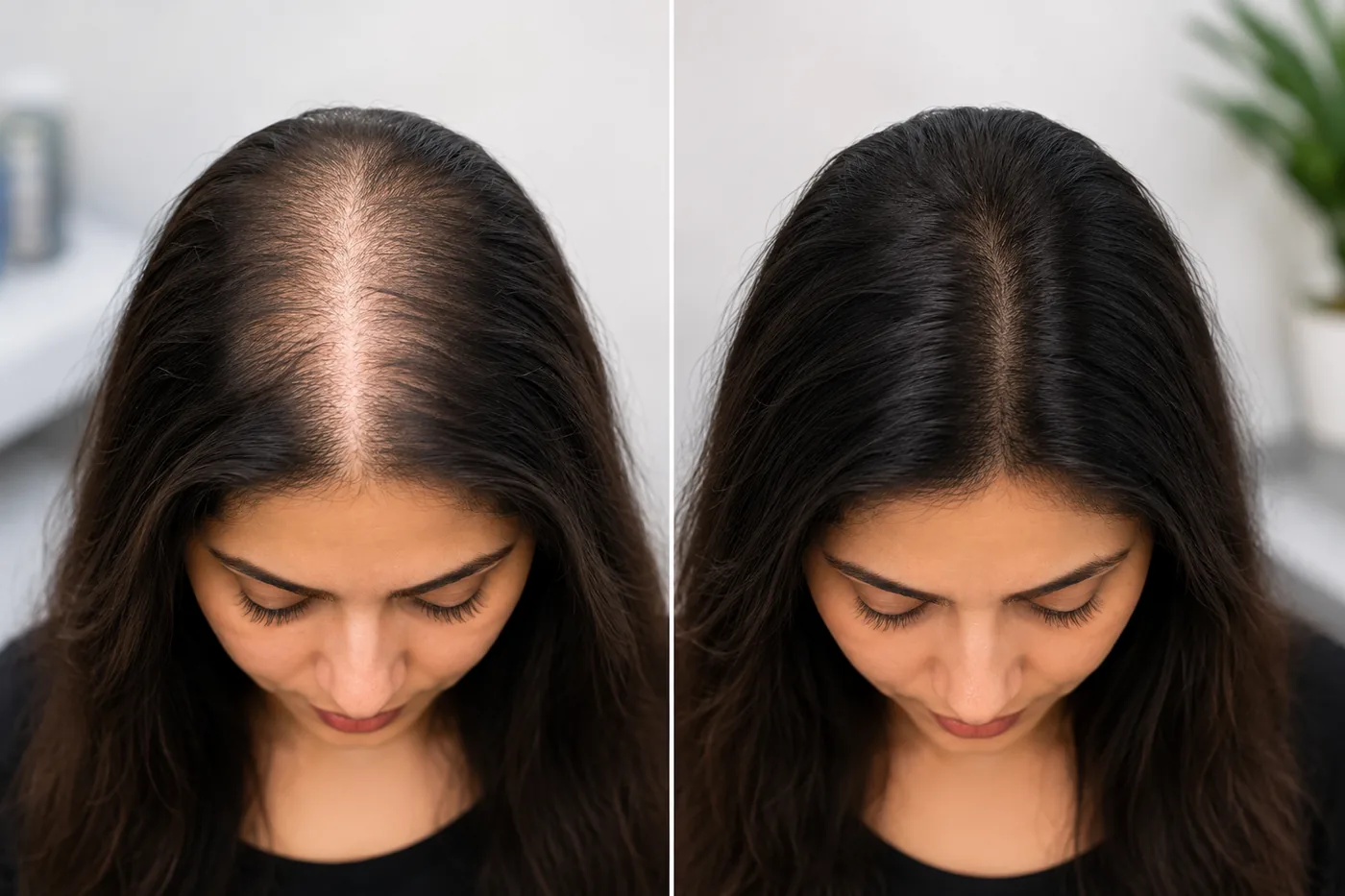
How much does a hair transplant cost for women?
Most clinics price a transplant by the graft, so the size of the area you want to treat drives the bill. US fees usually run $3–$8 per graft, and women's procedures tend to be smaller than men's because female hair loss rarely leaves large, completely bald zones.
| Procedure size | Typical grafts | Typical US cost | Common reasons in women |
|---|---|---|---|
| Small | 500–1,500 | $4,000–$8,000 | Temple recession, traction alopecia, scar repair, widening part |
| Medium | 1,500–2,500 | $8,000–$12,000 | Hairline lowering, frontal and mid-scalp thinning |
| Large | 2,500–4,000+ | $12,000–$15,000+ | Uncommon in women; extensive thinning with an unusually strong donor area |
Many clinics also set a minimum fee, often a few thousand dollars, so very small touch-ups can cost more per graft than a medium session. These are national ranges; big metros such as New York, Los Angeles, Miami and Chicago often sit toward the upper end.
Why can a woman's transplant cost more or less than a man's?
On graft count alone, women often pay less because they need fewer grafts. Several factors can push the price back up:
- No-shave techniques. Most women want to keep their hair long. Extracting and placing grafts between existing hairs is slower, and clinics often charge a premium for it.
- Working around native hair. Placing grafts among thinning but living hair takes more care to avoid damaging it, which adds time.
- More extensive screening. Women usually need bloodwork and sometimes a scalp biopsy before a surgeon will operate.
- Smaller, more selective surgeon pool. Surgeons with strong female-patient experience can charge more.
How does the technique change the price?
Technique is the second-biggest cost lever after graft count. FUT (strip surgery) removes a thin strip of scalp from the back of the head and is usually the cheaper option at around $3–$6 per graft. FUE extracts follicles one at a time and typically costs $5–$8 per graft. Unshaven or long-hair FUE, where visible hair is left in place, is usually at the top of that range or above it.
FUT is actually popular with women: the linear scar hides easily under longer hair, and it can yield more usable grafts from a donor area that's thinner than a typical man's. Compare both in our FUE vs FUT guide.
What should the quoted price include?
A good quote is all-in for the surgery day. Before you compare numbers, confirm each item is covered:
- Surgeon's fee and the technician team
- Local anaesthetic and any oral sedation
- The exact number (or a firm range) of grafts
- Facility fee and surgical supplies
- Take-home medications and aftercare products
- Post-operative check-ups, usually through 12 months
- Any add-ons you've agreed to, such as PRP on the day
What costs come on top of the surgery?
Budget for a few items that rarely appear on a transplant quote. A dermatologist visit and blood tests to confirm the cause of your hair loss may cost a few hundred dollars, more if a biopsy is needed. Ongoing medical treatment, such as minoxidil, is usually recommended to protect your existing hair, and it costs a modest amount every month for as long as you use it.
Some women also choose PRP, which typically runs $500–$1,500 per session in the US. Travel, hotel stays and time off work add up if you pick a surgeon outside your city. And because female thinning can continue around transplanted areas, some women later opt for a second, smaller session.
Does insurance cover a hair transplant for women?
Almost never. Insurers treat hair transplantation as cosmetic, even when the hair loss is distressing. The main exception can be reconstruction after burns, trauma or certain surgeries - check with your plan in writing before assuming anything. Diagnostic visits for a medical cause of hair loss are more likely to be covered than the surgery itself.
Most women spread the cost instead. Clinic payment plans and medical lenders commonly offer terms of 24–48 months. Read the fine print on promotional 0% offers, since deferred interest can be charged if the balance isn't cleared on time. See hair restoration financing for how these plans work.
How can you tell whether a quote is fair?
Divide the total by the graft count to get a per-graft figure, then check it against the ranges above. A quote well below $3 per graft in the US is worth questioning; one far above $8 should come with a clear reason, such as a highly specialised surgeon or a complex repair case.
Price should also match the plan. If two clinics quote very different graft numbers for the same photos, ask each to explain its reasoning. A surgeon who recommends fewer grafts, or advises against surgery entirely for diffuse thinning, may be giving you the more honest answer. Our cost hub explains how pricing works across the industry.
Is a cheaper alternative worth trying first?
Often, yes. Many women are advised to use medical treatment for 6–12 months before deciding on surgery. Topical minoxidil can slow thinning and sometimes thicken existing hair, and a year of use costs far less than even a small transplant. If it works well, you may need fewer grafts - or none.
Trying treatment first also tells a surgeon something useful: whether your hair loss is stable. Transplanting into an area that's still actively thinning can leave the result looking patchy as surrounding hair continues to go. Compare options in our non-surgical hair restoration guide before committing thousands of dollars to surgery.
How do you get an accurate price for your case?
Online ranges only go so far - your actual cost depends on your pattern of loss, donor density and goals. The most reliable way to get a real number is a consultation, ideally with two or three surgeons who treat women regularly. Send clear photos of your part, hairline and donor area, and ask each for an itemised quote. You can request free quotes from vetted US providers and compare them side by side.
Related guides
Frequently asked
Most women need somewhere between 800 and 2,500 grafts, depending on the area and density goal. Temple or scar repairs can be under 1,000; lowering a hairline often takes 1,500 or more. See how many grafts do I need.
Usually, yes - all-inclusive packages often cost $1,500–$3,500. But many high-volume clinics shave the whole head and do limited screening, which matters more for women. Weigh travel, follow-up care and candidacy checks, not just price.
Generally not, because transplants are classed as cosmetic. Diagnostic tests or treatment for a medical cause of hair loss may qualify. Confirm with your plan administrator before paying.
Some do. A single session often gives a good result, but female thinning can continue in surrounding hair, and some women add a smaller second session a year or more later to build density.
For many women it is, because it lets you return to work without an obvious change. It costs more and may limit how many grafts are moved in one day. Learn more about no-shave FUE.
Responsible surgeons turn down women whose thinning is diffuse, including the donor area, or whose hair loss is still active or undiagnosed. Moving grafts from weak donor hair can give poor results and thin the donor area further.
Over-the-counter topical minoxidil is usually the lowest-cost proven option. It is FDA-approved for women and costs a modest amount per month, but results fade if you stop using it.
About this guide
This is an independent overview to help you decide. Figures are typical US ranges, not a quote, and general information is not medical advice - confirm details at a consultation. See our methodology and disclosure.